
What if the tiniest cells in your body were hiding one of the biggest secrets in metabolism?
What if red blood cells weren’t just oxygen taxis — but silent blood sugar regulators?
What if the key to better glucose control was already flowing through your veins?
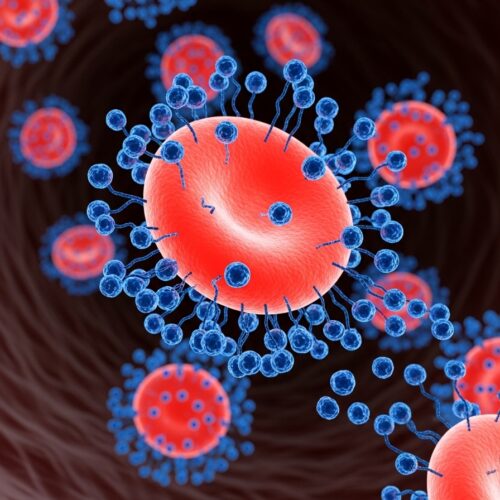
For decades, we were taught one simple story: red blood cells carry oxygen, and that’s it.
But new research flips that belief on its head — and it flips it hard.
According to a recent study published in Cell (Online ahead of print, PubMed ID: 41720104), red blood cells (RBCs) play a surprisingly powerful role in glucose metabolism — especially under low-oxygen conditions.
Yes, you read that right.
The cells we thought were passive passengers are actually metabolic players.
Here’s where it gets fascinating.
When oxygen levels drop — like at high altitude — the body doesn’t just adapt its breathing.
It rewires how it handles sugar.
In controlled studies on mice, researchers found that hypoxia (low oxygen) dramatically improved glucose tolerance.
Blood sugar levels stabilized faster.
Glucose disappeared from circulation more efficiently.
And here’s the twist — it wasn’t the liver or muscles doing the heavy lifting.
It was the red blood cells.
That discovery stunned researchers.
Because until now, RBCs were considered metabolically limited.
They don’t even have nuclei.
They lack mitochondria.
They were thought to simply shuttle oxygen and carbon dioxide.
But this study reveals something game-changing.
Under hypoxic conditions, newly produced red blood cells increase their glucose uptake.
They pull sugar directly out of the bloodstream.
They metabolize it through glycolysis.
And they act as a previously unrecognized “glucose sink.”
In simple terms?
They absorb excess sugar before it can cause damage.
Even more compelling — when researchers altered red blood cell counts, blood glucose levels changed accordingly.
Increase RBC mass, and glucose handling improved.
Reduce it, and the benefit faded.
That means RBCs weren’t just participating — they were necessary and sufficient for the effect.
That’s not a minor finding.
That’s a paradigm shift.
Now pause and think about what this means.
For years, diabetes research has focused on insulin, muscle cells, liver storage, and fat tissue.
Rarely did anyone look at red blood cells as active regulators.
But this research suggests they may be an overlooked metabolic buffer system.
And the mechanism is elegant.
Under low oxygen, the body stimulates erythropoiesis — the production of new red blood cells.
These fresh RBCs are metabolically primed.
They ramp up glucose transporters.
They accelerate glycolysis.
They consume more circulating glucose.
It’s as if the body flips a metabolic switch under hypoxia.
Why would evolution design this?
Because high altitude environments demand efficiency.
Because oxygen scarcity forces smarter fuel use.
Because survival requires adaptation.
And glucose regulation is survival.
Now imagine the clinical implications.
If scientists can mimic this hypoxia-induced effect without actually depriving someone of oxygen, it could open new therapeutic doors.
Instead of only targeting insulin pathways, we might enhance red blood cell–mediated glucose uptake.
Instead of focusing solely on muscle sensitivity, we might boost RBC metabolic capacity.
That’s a radically different approach to metabolic disease.
Of course, this research is still early.
It was conducted in animal models.
Human studies will be essential.
And no one is suggesting you move to the mountains to control your blood sugar.
But the biological principle is powerful.
The body contains redundant systems we barely understand.
And sometimes the most underestimated cells hold the most surprising answers.
What makes this discovery so compelling is its simplicity.
Red blood cells are abundant.
They circulate constantly.
They interact with glucose every second of your life.
If they can be harnessed metabolically, the impact could be profound.
This study doesn’t just add a footnote to physiology textbooks.
It rewrites a chapter.
It challenges assumptions.
It expands the metabolic map.
And perhaps most importantly — it reminds us that science is never finished.
Even the most familiar cells can surprise us.
Even “basic biology” can evolve.
Even oxygen carriers can become glucose regulators.
The next breakthrough in diabetes care might not come from a new drug class.
It might come from understanding the cells we thought we already knew.
And that’s the beauty of discovery.
The answers are often hiding in plain sight.
Or in this case — flowing quietly through your bloodstream.
Source:
Study published in Cell (Online ahead of print); indexed on PubMed (PMID: 41720104)
No comment yet, add your voice below!