





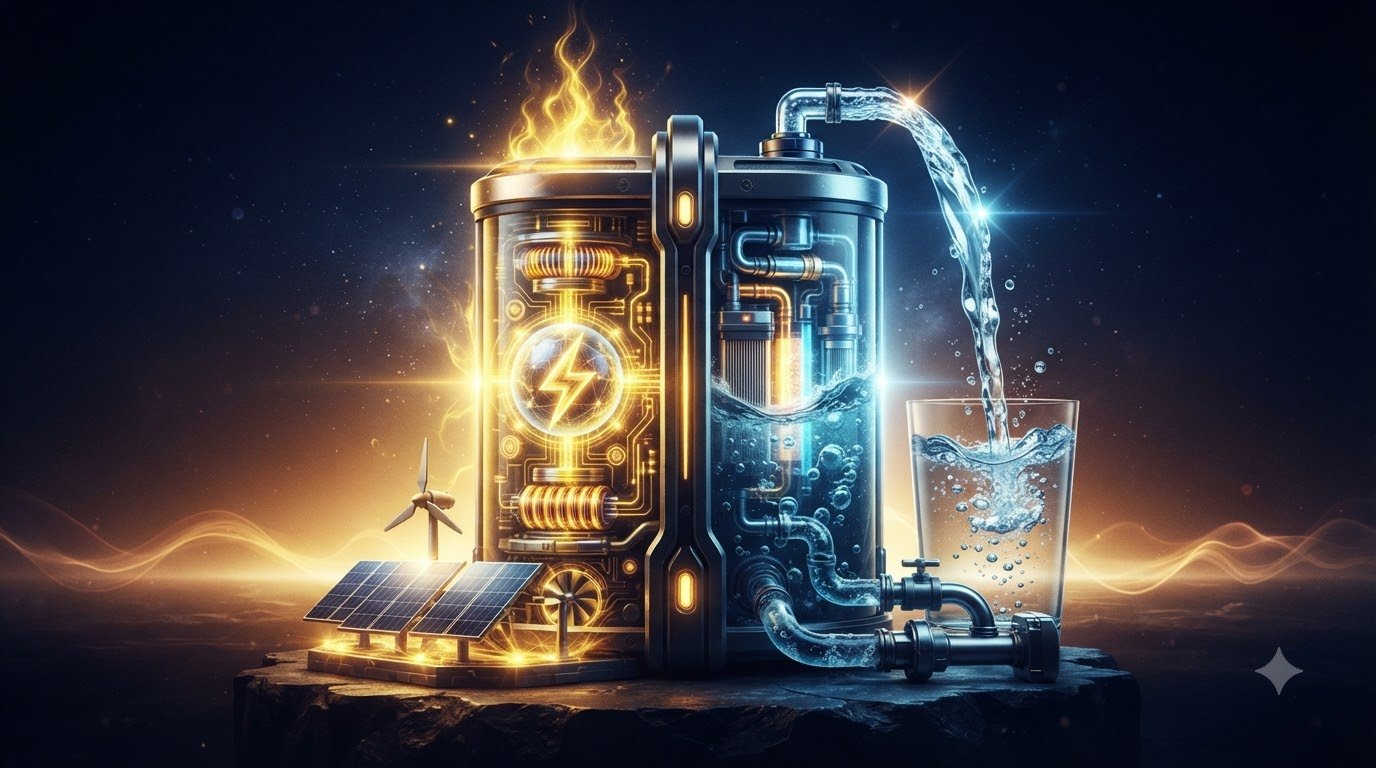
In battery science, there’s a rule so widely accepted that researchers rarely think to question it: moisture is the enemy. Water inside battery materials is generally viewed as something that causes instability, unwanted chemical reactions, and reduced performance — something to be carefully removed during manufacturing.
Scientists at the University of Surrey decided to test that assumption directly. What they found, published in the Journal of Materials Chemistry A, could meaningfully improve sodium-ion battery technology — and open a genuinely unexpected second application: turning seawater into fresh water.
Why Sodium Batteries Matter
Lithium-ion batteries currently power the overwhelming majority of smartphones, laptops, electric vehicles, and large-scale energy storage systems worldwide. They store substantial energy efficiently, but lithium and several other materials used in these batteries can be expensive to source and carry significant environmental costs tied to mining and extraction.
AI Reveals Explosive Bursts In Bird Evolution — And They Line Up With Earth’s Biggest Climate Shifts
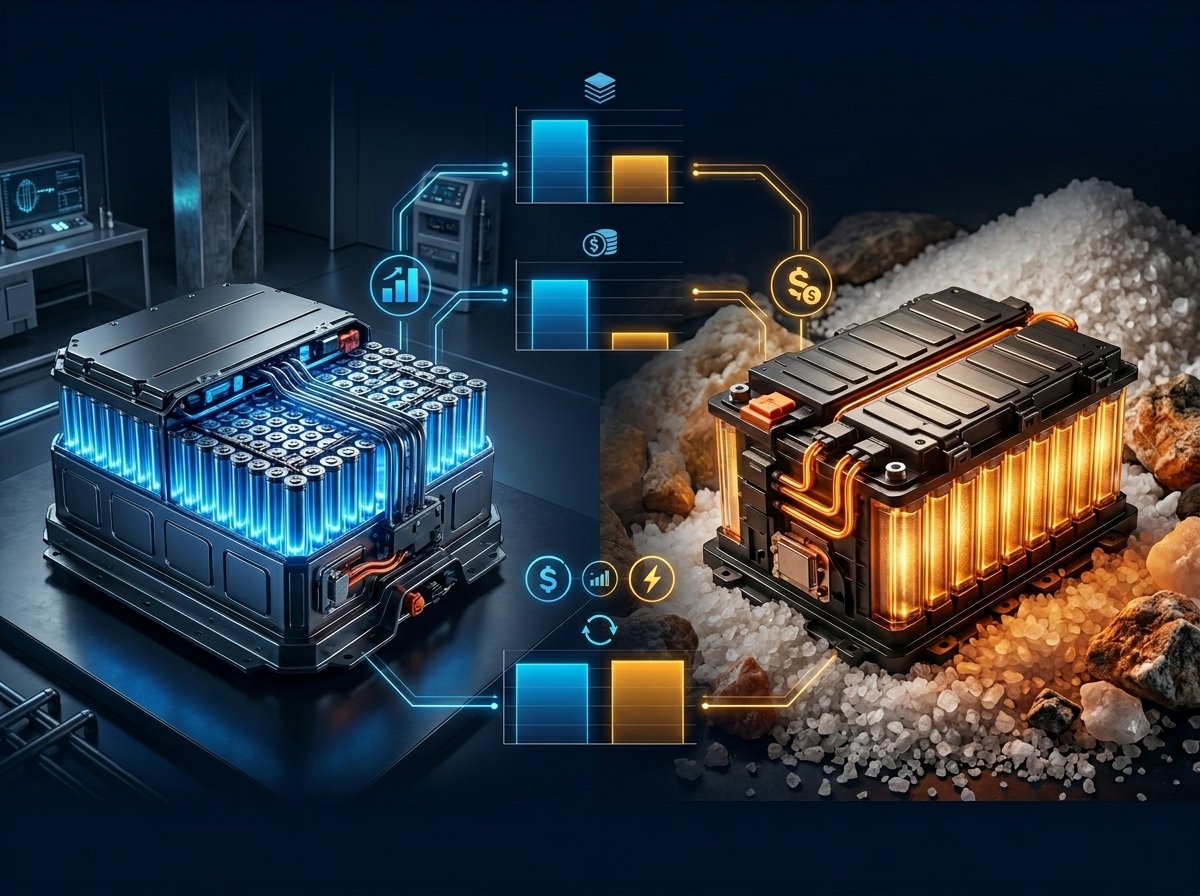
Sodium, by contrast, is remarkably abundant — found in seawater, salt deposits, and countless mineral formations across the globe. This makes sodium-ion batteries an attractive lower-cost, more sustainable alternative. They function in a broadly similar way to lithium-ion batteries, with charged sodium particles moving between two electrodes during charging and discharging.
The obstacle has always been performance. Most sodium-ion battery materials developed so far simply haven’t matched lithium-ion technology in how much charge they can store, how fast they charge, or how long they remain reliable — limiting sodium-ion batteries’ practical appeal despite their cost and sustainability advantages.
Challenging A Long-Standing Assumption
The Surrey research team, led by Dr. Daniel Commandeur, Research Fellow at the University of Surrey’s School of Chemistry and Chemical Engineering, focused their investigation on sodium vanadium oxide — a material that has been studied in battery research for years.
Specifically, they examined a form called nanostructured sodium vanadate hydrate (NVOH). The term “hydrate” indicates that water molecules are built directly into the material’s internal structure — not simply surface moisture, but water incorporated as part of the material’s fundamental crystalline architecture. “Nanostructured” refers to features engineered at an extraordinarily small scale, where subtle changes in shape and arrangement can significantly influence how ions move through a battery material.
Conventional practice would call for heating this material to drive that structural water out before using it in a battery — the standard approach based on the widespread assumption that water causes problems for battery performance. Instead, the Surrey team tested what would happen if they simply left the water in place.
A Dramatic, Unexpected Improvement
The results defied conventional expectations entirely.
The hydrated version of the material — with its natural water content intact — stored far more charge, charged much faster, and continued performing reliably for more than 400 charge cycles (one charge cycle representing a complete charge-and-discharge sequence).
In laboratory testing, the water-containing material held almost twice as much charge as typical sodium-ion battery materials — a performance level that placed it among the strongest cathode materials ever reported for this specific type of battery.
The cathode is one of a battery’s two primary electrodes, playing a central role in storing and releasing charged particles during operation. Improvements to cathode performance can significantly boost a battery’s overall capacity and efficiency — making this finding particularly significant for practical applications.
“Our results were completely unexpected,” said Commandeur. “Sodium vanadium oxide has been around for years, and people usually heat-treat it to remove the water because it’s thought to cause problems. We decided to challenge that assumption, and the outcome was far better than we anticipated. The material showed much stronger performance and stability than expected and could even create exciting new possibilities for how these batteries are used in the future.”
Testing The Material In Actual Salt Water
Encouraged by these results, the research team pushed the experiment further — testing the material’s performance when placed directly into salt water, one of the most chemically demanding environments a battery material can encounter. Salt water can trigger unwanted chemical reactions and interfere with normal ion movement, causing many materials to fail or degrade quickly.
Despite these challenging conditions, the sodium vanadate hydrate continued functioning effectively.
More strikingly, the system began actively removing dissolved salt from the water during operation. The sodium-based cathode material pulled sodium ions out of the salt water, while a paired graphite electrode simultaneously removed chloride ions — together capturing the two primary charged components of ordinary table salt.
This process is known as electrochemical desalination. Unlike conventional desalination methods that rely primarily on pressure (reverse osmosis) or heat (thermal distillation), electrochemical desalination uses electrical reactions and specifically selected electrode materials to actively draw charged salt particles directly out of solution.
A Battery That Could Also Make Fresh Water
Commandeur is enthusiastic about the broader implications of this dual functionality.
“Being able to use sodium vanadate hydrate in salt water is a really exciting discovery, as it shows sodium-ion batteries could do more than just store energy — they could also help remove salt from water,” he said. “In the long term, that means we might be able to design systems that use seawater as a completely safe, free and abundant electrolyte, while also producing fresh water as part of the process.”
An electrolyte is the substance that allows charged particles to travel between a battery’s two electrodes. Most commercial batteries currently rely on specially formulated liquid or solid electrolytes that add cost and complexity to manufacturing. If seawater itself could safely and effectively serve this role, it could substantially reduce material costs while simultaneously adding an entirely new function — water purification — to the same device.
A Single Technology With Two Powerful Applications
This research points toward a genuinely compelling possibility: future devices that simultaneously store renewable energy and produce fresh water from the same underlying system.
Such combined systems could store electricity generated by solar panels or wind turbines while also removing salt from seawater — a combination that could prove especially valuable in coastal regions where access to fresh water remains limited, but seawater and renewable energy resources are both abundantly available.
The researchers are careful to note that this work is still at an early stage. Considerably more testing and development will be needed before this approach could be scaled into commercial batteries or large-scale desalination systems.
Simplifying Manufacturing While Improving Performance
Beyond the performance gains themselves, this discovery could actually simplify battery manufacturing. Rather than adding an additional processing step specifically to remove water from sodium vanadate materials — a step that adds time, energy, and cost to production — manufacturers could potentially skip that step entirely, leaving the water in place while achieving genuinely better battery performance as a result.
Strengthening The Case For Sodium-Ion Technology
This discovery adds meaningful weight to the broader argument for sodium-ion batteries as a viable alternative to lithium-based technology. Because sodium is abundant, widely distributed geographically, and relatively inexpensive to source, sodium-ion systems could become a safer, more sustainable option for storing renewable energy on electrical grids or powering electric vehicles — provided performance continues to close the gap with established lithium-ion technology.
By simply challenging a long-standing assumption about moisture that most researchers in the field had never thought to question, the Surrey team found a remarkably straightforward way to meaningfully improve an existing, well-studied battery material — bringing high-performance sodium-ion energy storage closer to practical, real-world use, while hinting at a genuinely novel future where a single device could both store clean energy and help turn seawater into something we can drink. 🔋💧
Key Takeaways
- Researchers at the University of Surrey found that leaving natural water inside sodium vanadate hydrate — rather than removing it through conventional heat treatment — nearly doubled the material’s battery performance
- The hydrated material stored almost twice as much charge as typical sodium-ion materials and performed reliably for over 400 charge cycles
- When placed in salt water, the material continued functioning and began actively removing dissolved sodium and chloride ions through electrochemical desalination
- This discovery suggests future batteries could combine renewable energy storage with seawater desalination in a single system
- The technology could also simplify battery manufacturing by eliminating a water-removal processing step
- This research is at an early stage; further testing is needed before commercial or large-scale application
Source: University of Surrey — August 1, 2026
Journal Reference: Daniel Commandeur, Vlad Stolojan, Monica Felipe-Sotelo, James Wright, David Watson, Robert C. T. Slade. Nanostructured sodium vanadate hydrate as a versatile sodium ion cathode material for use in organic media and for aqueous desalination. Journal of Materials Chemistry A, 2025; 13 (40): 34493.
DOI: 10.1039/d5ta05128b