








Statins are among the most widely prescribed and effective medications in modern medicine, credited with preventing countless heart attacks and strokes by lowering cholesterol. Yet for a significant number of patients, taking them comes with a frustrating trade-off: muscle pain, weakness, and exercise intolerance severe enough that many reduce their dose or stop taking the medication entirely.
Researchers at McMaster University may have just identified the biological mechanism responsible — a discovery that could eventually allow doctors to eliminate the side effects while preserving the drug’s lifesaving cardiovascular benefits.
Published in Science Advances, the study reveals a previously unrecognized interaction between the immune system and muscle cell metabolism that appears to drive statin-related muscle damage.
Why This Problem Matters So Much
“Statins are among the most effective medications we have for reducing cardiovascular disease risk and preventing early death,” said Jonathan Schertzer, professor in McMaster’s Department of Biochemistry and Biomedical Sciences and senior author of the study. “Unfortunately, muscle side-effects lead some people to reduce their dose or stop taking the medication altogether. We wanted to understand why this happens and whether it might be possible to separate the side-effects from the benefits.”
AI Reveals Explosive Bursts In Bird Evolution — And They Line Up With Earth’s Biggest Climate Shifts
The scale of this problem is substantial. Research estimates that between 7 and 29 percent of statin users experience muscle-related symptoms. Given how many millions of people worldwide take statins for cardiovascular protection, even the lower end of that range represents an enormous number of patients affected — some of whom may be foregoing genuine, life-protecting cardiovascular benefits because the side effects become too difficult to tolerate.
Although the connection between statins and muscle problems has been recognized clinically for years, the precise biological mechanism behind it has remained incompletely understood — until now.
How Statins Disrupt Muscle Cell Energy
The research, led by first authors Nazli Robin and Nicole Barra of the Schertzer Lab at McMaster, found that statins can interfere with how muscle cells generate energy.
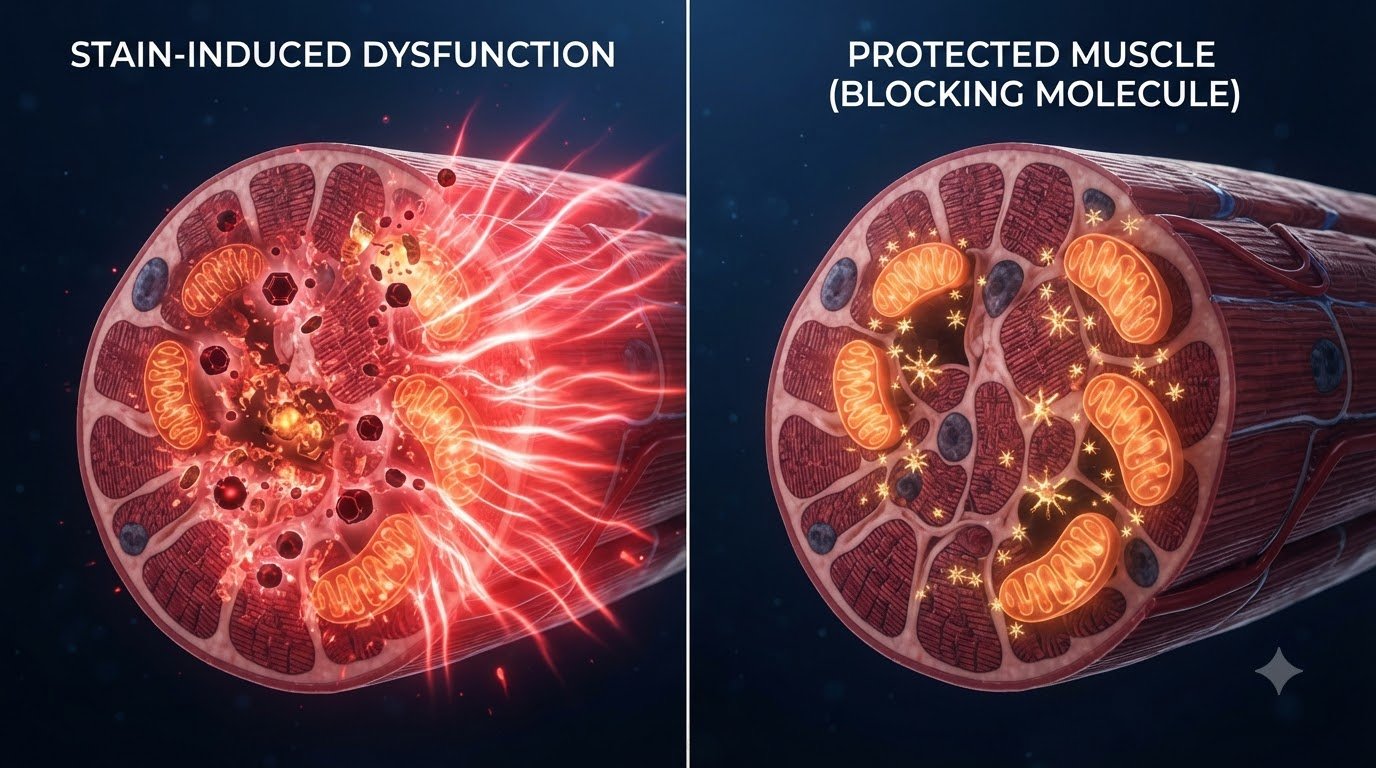
This disruption to normal cellular energy production doesn’t just weaken the cell’s function directly — it appears to trigger something more complex: an immune response activated from within the muscle cells themselves.
In experiments involving both isolated muscle cells and mouse models, this activated immune response led to measurable muscle tissue damage. Crucially, when the researchers blocked this immune response, they were able to prevent much of the resulting muscle damage — direct evidence that the immune pathway itself, rather than the statin’s core mechanism, was driving the harmful side effects.
An Unexpected Link Between Metabolism And Immunity
One of the more scientifically fascinating aspects of this research is what it reveals about the relationship between cellular metabolism and the immune system — two areas of biology not traditionally thought to interact this directly within muscle tissue.
The findings show that changes in how muscle cells process energy can directly trigger those same cells to activate their own internal immune response — essentially, a metabolic disruption inside the cell setting off an inflammatory alarm that ultimately causes damage to the very tissue trying to protect itself.
This discovery offers broader insight into how inflammation may contribute to medication side effects more generally, beyond just statins specifically — a mechanism that could have relevance for understanding side effects of other drugs that affect cellular metabolism.
The Most Promising Finding: Separating Side Effects From Benefits
Perhaps the single most clinically significant finding from this research is this: the mechanism causing muscle side effects appears to operate through a completely separate pathway from the mechanism statins use to lower cholesterol.
“One of the most exciting findings of the research is that the mechanism causing muscle side-effects appears to be separate from the mechanism that lowers cholesterol,” Schertzer explained. “That suggests it may one day be possible to target the side-effects without interfering with the cardiovascular benefits that make statins so valuable.”
This distinction matters enormously for future treatment development. If muscle damage and cholesterol reduction were driven by the same biological pathway, any attempt to block the side effects would risk simultaneously weakening the drug’s core therapeutic benefit. Because these appear to be genuinely separate mechanisms, researchers may be able to develop targeted treatments that protect muscle tissue without diminishing statins’ protective effect on the heart — potentially the best of both outcomes for patients.
What Comes Next
The research team is clear that this discovery represents an important step forward — not an immediate treatment available to patients today. Considerably more research is needed before these findings can be translated into an actual clinical therapy.
Still, the newly identified immune pathway provides several specific, testable targets for future medications designed to prevent statin intolerance — a meaningfully different starting point than researchers had before this study.
“These findings give us a clearer understanding of why some patients experience muscle symptoms and provide promising directions for making these important medications safer and more effective in the future,” Schertzer added.
An International Collaborative Effort
This research involved collaboration across multiple institutions worldwide, including the Centre International de Recherche en Infectiologie (CIRI) in Lyon, France; the Centre for Muscle Research at the University of Melbourne, Australia; the Murdoch Children’s Research Institute and The Royal Children’s Hospital in Australia; York University in Canada; and McMaster’s own Department of Pathology and Molecular Medicine. The work was funded by the Natural Sciences and Engineering Research Council of Canada (NSERC).
Why This Matters For Millions Of Patients
Statin intolerance is a genuinely significant public health issue — not because the medication itself is flawed, but because the side effects it causes in a meaningful subset of patients directly undermine adherence to one of medicine’s most effective preventive treatments. Every patient who stops taking a statin because of muscle pain represents a potential loss of the cardiovascular protection that medication was providing.
If future research successfully translates this discovery into a companion therapy — something that could be taken alongside statins to specifically block the muscle-damaging immune pathway while leaving cholesterol reduction fully intact — it could meaningfully improve statin adherence rates and, by extension, reduce preventable heart attacks and strokes across the population of patients who currently discontinue treatment due to intolerable side effects.
Key Takeaways
- McMaster University researchers identified an immune response within muscle cells that appears to explain why statins cause muscle pain, weakness, and exercise intolerance in some patients
- Statins disrupt energy production in muscle cells, which triggers an internal immune response leading to tissue damage
- Blocking this immune response in lab and mouse studies prevented much of the resulting muscle damage
- This side-effect mechanism appears to be separate from the pathway statins use to lower cholesterol — suggesting future treatments could target one without affecting the other
- This is early-stage research; more studies are needed before it can be developed into an approved patient treatment
- Patients should never stop or adjust statin medication on their own — always consult a doctor about any side effects
When To See A Healthcare Professional
If you are experiencing muscle pain, weakness, or unusual fatigue while taking a statin, speak with your doctor before making any changes to your medication. There may be alternative statin options, dosage adjustments, or other management strategies available. Never stop taking a prescribed statin without medical guidance, as doing so could increase your risk of heart attack or stroke.
⚠️ Medical Disclaimer: This article is for informational purposes only and is based on early-stage laboratory and animal research. It does not constitute medical advice and does not represent an available treatment for statin side effects. Always consult a qualified healthcare professional before making any changes to prescribed medication.
Source: McMaster University — August 1, 2026
Journal Reference: Nazli Robin, Nicole G. Barra, Kevin P. Foley, et al. Statins promote muscle metabolic danger and NLRP3-mediated myopathy via lower protein-prenylation and YAP. Science Advances, 2026; 12 (25).
DOI: 10.1126/sciadv.adz3612