








For decades, it was considered a footnote. A curious, harmless observation that some aging men seemed to lose the Y chromosome from certain cells in their bodies. Scientists noticed it, noted it, and largely moved on — chalking it up to one of many minor cellular oddities that accumulate as the body ages.
That footnote is now becoming one of the most consequential stories in men’s health research.
What The Y Chromosome Actually Does
The Y chromosome has long had a reputation as the simple one. Small, fragile, and gene-poor compared to its partner the X chromosome, it was historically understood to do two things: determine biological sex and support sperm production. Beyond that, it was assumed to be largely inert — a relic chromosome sitting quietly in nearly every male cell without doing much of anything useful.
Of all 46 chromosomes in a typical human cell, the Y is the only one that can be lost without immediately killing the cell. For a long time, scientists interpreted this as evidence that losing it didn’t really matter.
The Y chromosome was only fully sequenced a few years ago. What researchers have found since then is rapidly changing that picture.
The Loss Is More Common Than Most People Know
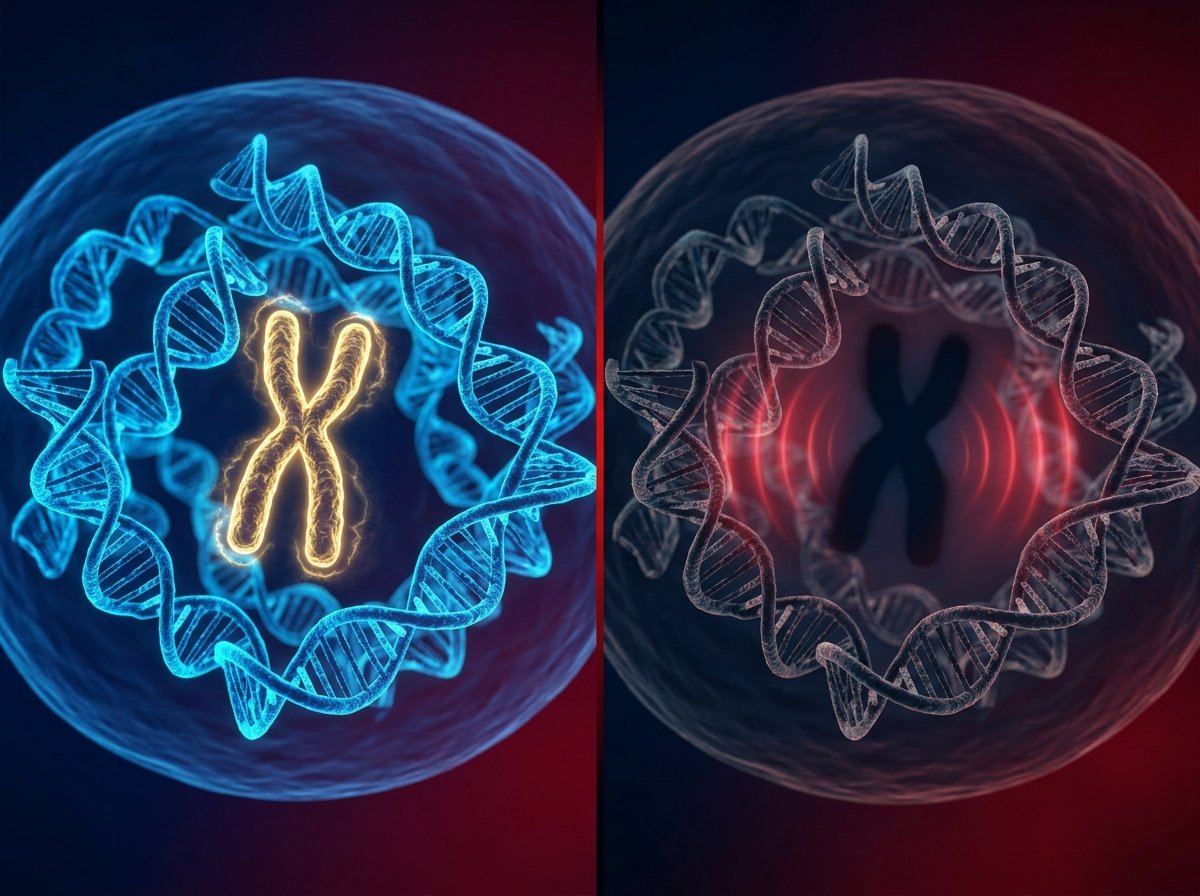
As some men age, certain cells in their blood, brain, and immune system begin to lose the Y chromosome entirely. The cell carries on — but without it.
This is not a rare edge case. Among 70-year-old men, roughly 40 percent already show Y chromosome loss in their blood cells. Among 93-year-olds, that number rises to 57 percent. More than half of the oldest men studied are walking around with a significant proportion of cells that have quietly dropped one of their chromosomes.
For decades, this was classified as a benign marker of aging — interesting, but harmless. Emerging evidence is now making clear that this classification was almost certainly wrong.
The Health Consequences Are Serious
The connections being uncovered between Y chromosome loss and disease are striking in both their range and their severity.
In 2022, a study found that when specialized immune cells in mouse hearts lacked the Y chromosome, it led directly to cardiovascular dysfunction and death — suggesting a direct mechanistic link between Y chromosome loss and heart failure risk.
In 2023, researchers discovered that up to 40 percent of older men with bladder cancer lack the Y chromosome in their tumor cells. This finding carries particular weight given that men are already up to five times more likely than women to develop bladder cancer. If the Y chromosome is playing a protective role against tumor development, its loss could help explain part of that longstanding gap.
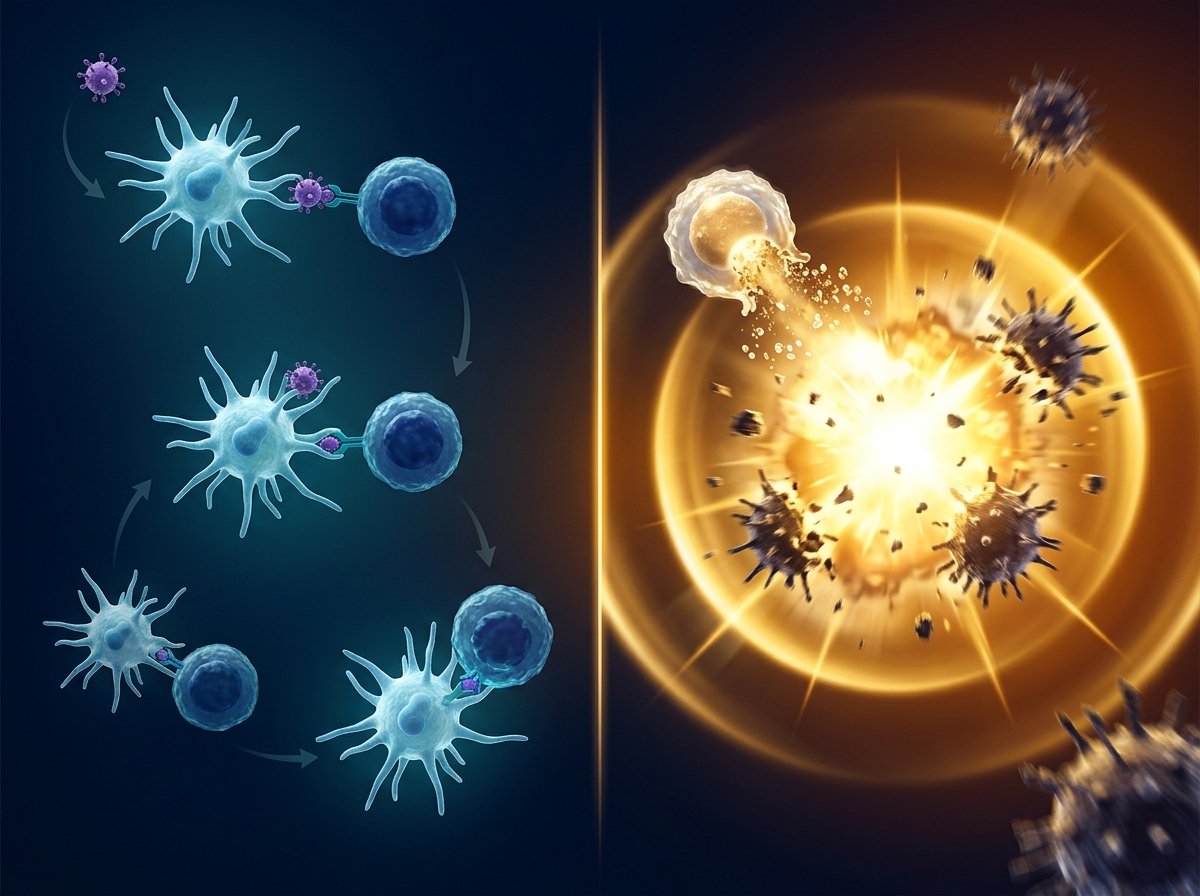
In 2025, two further studies added to the picture. One found that immune cells missing the Y chromosome are measurably less effective at attacking and destroying cancerous cells — a direct link between Y loss and compromised cancer defense. A separate review concluded that Y chromosome loss is likely playing an important role in shaping overall male immune function as men age.
Beyond cancer and cardiovascular disease, Y chromosome loss has also been associated with kidney disease and Alzheimer’s disease, though the mechanisms behind those connections are still being actively investigated.
The Spin Of Alien Worlds Just Revealed A Stunning Hidden Secret About How Planets Are Born
Why It Matters Beyond Individual Health
The Y chromosome, despite containing only about 0.9 percent of total male DNA, appears to be involved in a far wider range of cellular functions than anyone previously assumed — immune regulation, cancer surveillance, cardiovascular maintenance, and potentially neurological health.
That realization is forcing a significant rethinking in genetics and evolutionary biology as well.
The human Y chromosome has lost roughly 97 percent of its ancestral genes over millions of years of evolution. Today it retains only around 3 percent of what it once contained. Some geneticists believe this erosion will continue until the chromosome disappears entirely — potentially within the next 5 million years.
Evolutionary biologist Jennifer Hughes disagrees with that timeline. The genes that remain on the Y, she argues, serve crucial functions across the whole body — and the selective pressure to maintain them is too strong to allow their complete loss.
Evolutionary biologist Jenny Graves takes a different view. She acknowledges the importance of Y chromosome genes but points out that other species — including the spiny rat and mole vole — have already lost their Y chromosomes entirely, with other chromosomes stepping in to take over sex determination. What happened in those species, she argues, could happen in humans too.
What both perspectives agree on is this: the Y chromosome is not the simple, expendable relic it was once assumed to be. Its genes matter. And when they disappear from aging cells, something real and measurable is lost with them.
What This Means Going Forward
Research into Y chromosome function is still in its early stages. The chromosome was only fully sequenced recently, and scientists are only beginning to map out the full scope of what it does across different tissues and organ systems in the body.
But the early findings are already significant enough to demand attention — both from researchers and from the men whose health may quietly depend on a chromosome that science spent decades dismissing.
Loss of the Y chromosome in aging men is not a harmless quirk. It may be one of the most important biological processes shaping male health, disease vulnerability, and longevity in the second half of life. 🧬
Source: ScienceAlert / Multiple peer-reviewed studies — June 13, 2026
Key References:
— Y chromosome loss and cardiovascular dysfunction: Nature, 2022
— Y chromosome loss in bladder cancer tumors: Nature, 2023
— Immune cell dysfunction from Y chromosome loss: Nature Immunology, 2025
— Y chromosome loss and male immune system: Nature Reviews Genetics, 2025