








If you’ve been living with osteoarthritis, you’ve probably heard the same message repeatedly: manage the pain, slow the progression, and eventually — when it gets bad enough — consider joint replacement surgery.
Researchers at the University of Colorado Boulder just set out to change that message entirely.
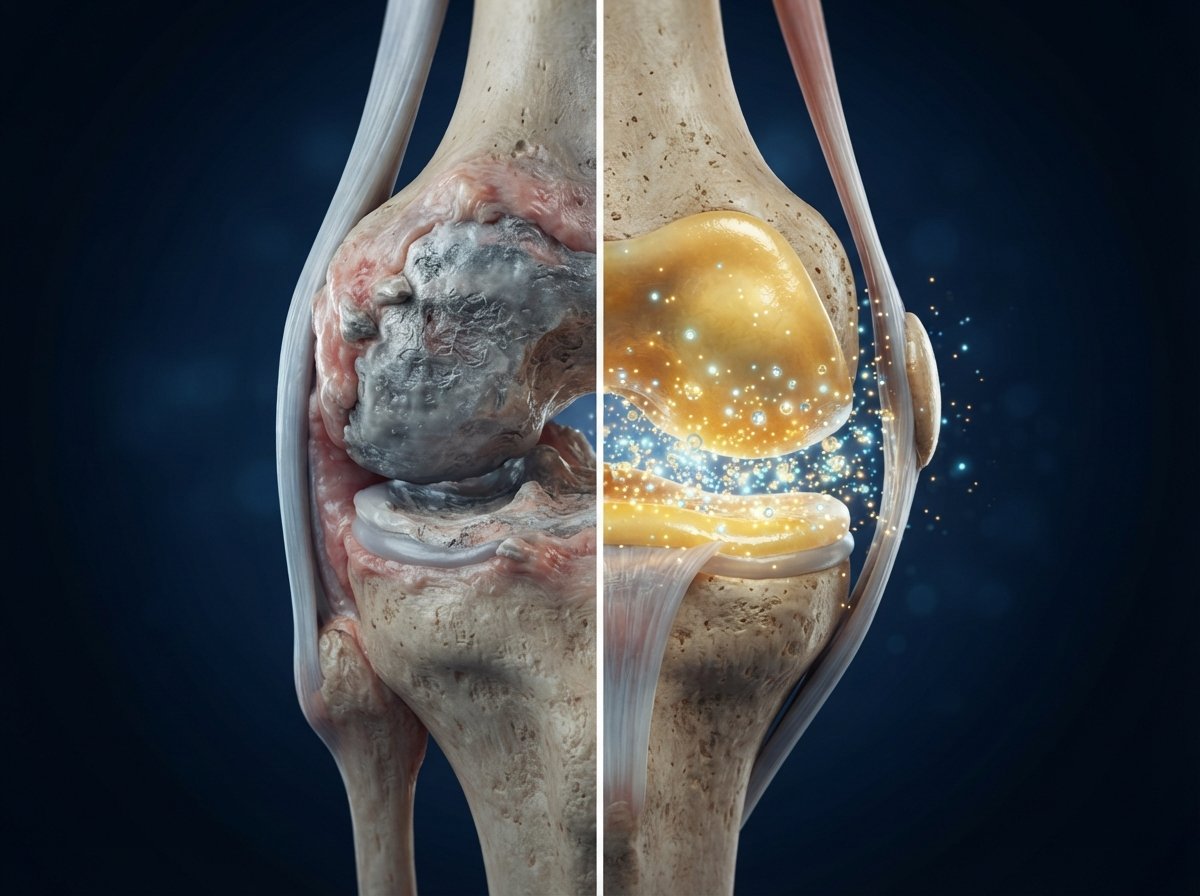
Their team has developed two experimental treatments that don’t just manage osteoarthritis — they appear to reverse it. In animal studies, a single injection restored arthritic joints to a healthy state within weeks. A second therapy rebuilt cartilage and bone using the body’s own healing cells.
“Our goal is not just to treat pain and halt progression, but to end this disease,” said principal investigator Professor Stephanie Bryant, professor of chemical and biological engineering at CU Boulder.
What Is Osteoarthritis And Why Is Treatment So Limited?
Osteoarthritis is the third most common disease in the United States and affects roughly one in six people over age 30 worldwide — that’s more than 500 million people globally.
The condition develops when cartilage — the smooth, protective tissue cushioning joints where bones meet — gradually breaks down. As cartilage wears away:
- Bones begin rubbing directly against each other, causing pain and swelling
- Joint structure changes over time, progressively limiting movement
- Everyday activities like walking, climbing stairs, and sleeping become increasingly difficult
Current treatment options are frustratingly limited:
- Pain medications and anti-inflammatories manage symptoms without addressing underlying damage
- Steroid injections provide temporary relief but don’t repair tissue
- Physical therapy helps maintain function but cannot reverse structural damage
- Joint replacement surgery — effective but major, expensive, and requiring months of recovery
There is currently no approved treatment that regenerates damaged joint tissue. The Colorado research aims to change that.
The First Treatment: A Regenerative Injectable
The first experimental therapy is a patented particle delivery system designed to be injected directly into a damaged joint. The particles contain an existing drug that has already received FDA approval for other uses — which could significantly speed the regulatory pathway toward human use.
Inside the joint, these particles release controlled doses of the drug over several months — providing sustained therapeutic effect from a single injection, rather than requiring repeated treatments.
When tested in animals with both established osteoarthritis and acute joint injuries, the results were striking:
- Affected joints returned to a healthy state within four to eight weeks
- The treatment showed regenerative effects — not just pain reduction — in human joint cells obtained from patients undergoing replacement procedures
This is the critical distinction: the therapy doesn’t simply mask symptoms. It appears to trigger the joint to rebuild itself.
The Second Treatment: Engineering Repair From Within
For patients with more extensive structural damage — large cartilage defects or areas of bone loss — the team developed a complementary approach using engineered proteins.
This therapy is delivered arthroscopically — through a small camera-guided surgical procedure that is far less invasive than full joint replacement. The protein material is introduced into the defect site, where it:
- Hardens in place to fill the damaged area
- Attracts the body’s own progenitor cells — cells capable of developing into cartilage and bone tissue
- Scaffolds the rebuilding process, guiding those cells to regenerate the damaged structure
According to Bryant, filling cartilage or bone defects with this material led to “full regeneration and repair of the defect” in animal models.
The $33.5 Million Federal Bet On Joint Regeneration
This research didn’t emerge quietly in a laboratory corner. It’s the centerpiece of one of the first programs ever launched by ARPA-H — the Advanced Research Projects Agency for Health, modeled on the defense research agency DARPA that helped develop technologies including the internet and GPS.
ARPA-H’s NITRO program — Novel Innovations for Tissue Regeneration in Osteoarthritis — was established specifically to develop “minimally invasive therapeutics that fully regenerate damaged joints.” The Colorado team received funding of up to $33.5 million, contingent on achieving positive results at each phase.
Two years ago, they received the initial award. This year, following successful completion of phase one, they advanced to phase two.
“In two years, we were able to go from a moonshot idea to developing these therapies to demonstrating that they reverse osteoarthritis in animals,” said Bryant.
What Do Physiotherapists And Orthopedic Specialists Think?
Dr. Evalina Burger, professor and chair of the Department of Orthopedics at CU Anschutz, offered the clinical perspective:
“At the moment, the options for many patients are either a massive, expensive surgery or nothing. There’s not a lot in between. That’s why ARPA-H is so important.”
From a physiotherapy standpoint, this research matters beyond just the treatments themselves. Osteoarthritis rehabilitation is currently focused on:
- Strengthening muscles around the joint to reduce load on damaged cartilage
- Pain management through modalities and exercise
- Functional training to maintain independence despite structural damage
- Pre- and post-surgical rehabilitation for those undergoing replacement
If regenerative injections become available, physiotherapy’s role would shift — potentially toward supporting tissue regeneration through targeted loading protocols, optimizing outcomes from a single treatment session, and maintaining function long-term without ever needing surgery.
Key Takeaways
- A single injection reversed osteoarthritis in animals within four to eight weeks in University of Colorado research
- A second therapy using engineered proteins achieved full cartilage and bone regeneration in animal defect models
- The drug used in the injection already has FDA approval for other applications
- The project received $33.5 million from ARPA-H and has advanced to phase two
- Animal and human cell results have been positive — clinical trials could begin within 18 months
- These treatments aim to regenerate joints, not just manage pain — a fundamental shift from current standard of care
What You Can Do Now — While Research Continues
While awaiting clinical development, evidence-based strategies that support joint health include:
- Strength training — particularly quadriceps strengthening for knee OA, shown to reduce pain and improve function
- Aquatic exercise — reduces load on joints while building strength
- Weight management — each kilogram of body weight reduction reduces approximately four kilograms of force through the knee
- Walking programs — consistent low-impact movement supports cartilage nutrition
- Anti-inflammatory dietary patterns — Mediterranean diet associated with lower OA progression in observational studies
When To See A Healthcare Professional
Seek professional evaluation if you experience:
- Joint pain that persists more than a few weeks
- Morning stiffness lasting more than 30 minutes
- Swelling, warmth, or instability in a joint
- Pain that limits your daily activities
- Grinding or clicking sounds with movement
A physiotherapist or orthopedic specialist can assess your joint health, provide diagnosis, and guide appropriate management while monitoring developments in regenerative treatment options.
⚠️ Medical Disclaimer: This article is for informational purposes only. The treatments described are currently in animal study phase and not yet approved for human use. Always consult a qualified healthcare professional for medical advice about your specific condition.
Have you been living with osteoarthritis? What has your experience with current treatments been? Share your story in the comments — your experience could help others navigating the same journey.
Source: University of Colorado Boulder / ARPA-H NITRO Program — June 30, 2026
Journal Reference: Animal study results to be published in peer-reviewed journal later in 2026. Company launched: Renovare Therapeutics Inc.
DOI: Pending peer-reviewed publication