







There is a quiet agricultural crisis unfolding across the world’s farmlands. It doesn’t make headlines the way floods or droughts do, but its impact on global food production is just as serious.
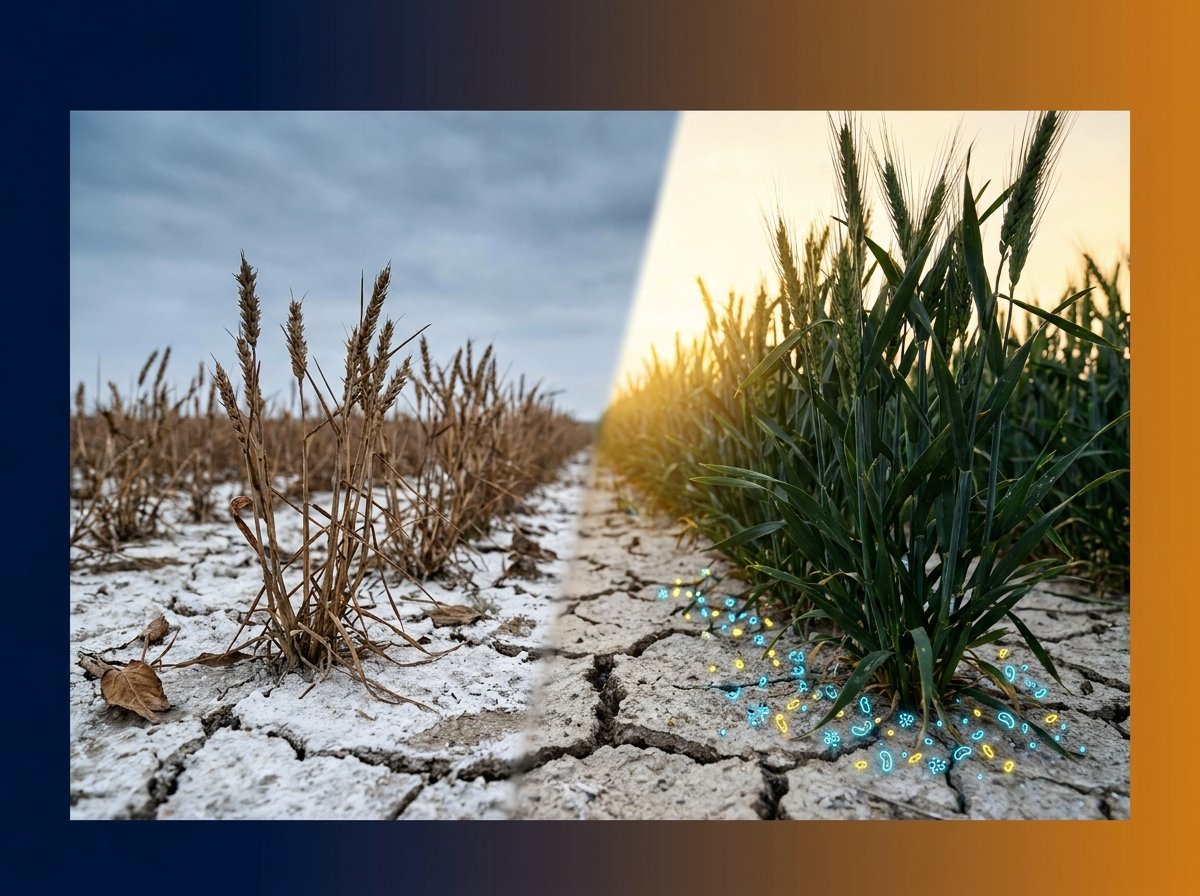
Soil salinity — the buildup of salt in agricultural land — affects more than a billion hectares worldwide. It’s driven by irrigation that deposits dissolved salts over decades, rising sea levels pushing saltwater into coastal farmland, and increasingly erratic precipitation that concentrates salt in surface soils. In severely affected areas, crops fail entirely. Yields collapse. Farmers abandon fields they’ve worked for generations.
And the problem is accelerating, not slowing.
Researchers at the University of East Anglia just published findings that could fundamentally change how we approach this growing agricultural threat — and the solution was already living in the soil.
The Hidden World Of Beneficial Soil Bacteria
Most people think of bacteria as something to be avoided — associated with disease, contamination, and infection. But agricultural soil is home to an entirely different category of microorganisms: plant growth-promoting rhizobacteria, or PGPR.
These beneficial bacteria live in the zone immediately surrounding plant roots — a biologically rich region called the rhizosphere — and have evolved complex, mutually beneficial relationships with the plants growing above them. They help plants access nutrients, protect against pathogens, and produce hormones that support root and shoot development.
Scientists have studied PGPR for decades, and several species are already used commercially as biological seed treatments to improve crop establishment. But exactly how these bacteria help plants cope with salt stress specifically has remained incompletely understood.
That understanding just changed.
The Discovery: Lignin, Not Salt Exclusion
When the University of East Anglia research team began investigating how PGPR help plants survive in salty soils, they expected to find a familiar mechanism: the bacteria helping plants actively exclude salt from entering their roots, reducing the toxic ion concentrations inside plant tissue.
That is not what they found.
Instead, the bacteria appeared to stimulate the production of lignin — a naturally occurring structural polymer that forms a key component of plant cell walls, particularly in roots. Lignin is the compound that makes wood hard, gives plant stems their rigidity, and provides physical strength to root architecture.
In the context of salt stress, lignin-reinforced roots appear to offer a different kind of protection — not blocking salt entry at a molecular level, but physically strengthening the root’s structural integrity and making it more resilient against the mechanical and physiological stress that salt imposes on plant tissue.
This is a genuinely novel mechanism. Previous research has focused heavily on ionic regulation — how plants manage sodium and chloride ions at the cellular level. The idea that bacterial stimulation of structural compounds like lignin could be a primary pathway for salt tolerance opens an entirely new research direction.
Testing In Greenhouse And Field Conditions
Critically, the researchers didn’t just identify the mechanism in the laboratory. They tested it where it actually matters — in real growing conditions.
Greenhouse experiments confirmed that plants treated with the beneficial bacteria showed measurably improved health indicators under salt stress compared to untreated controls. The lignin-reinforced roots appeared to support better overall plant function even when growing in salty soil that would typically suppress growth significantly.
Field tests went a step further, demonstrating that the bacterial treatment produced higher crop yields in genuinely salty field conditions — the ultimate test of whether a biological mechanism translates into real agricultural benefit.
The combination of mechanistic laboratory evidence and real-world yield data is what gives this research its practical significance. A lot of promising laboratory findings fail to translate into field-level improvements. These didn’t.
“These findings highlight how soil microbes can fundamentally change how plants respond to environmental stress,” the research team noted. “The discovery opens exciting possibilities for developing bio-based treatments that enhance salt tolerance in crops.”
Why This Matters For Global Food Security
The timing of this discovery is significant in the context of where global agriculture is heading.
Salinity-affected land is not evenly distributed — it disproportionately impacts some of the world’s most agriculturally important and food-insecure regions, including parts of South Asia, the Middle East, and sub-Saharan Africa. As populations grow and climate pressures intensify, these regions face the dual challenge of needing to produce more food from land that is becoming progressively less productive.
Traditional approaches to saline soil management include:
- Leaching — applying large volumes of water to flush salts through the soil profile, which is itself water-intensive and often impractical
- Soil amendments — applying gypsum or other chemicals to chemically displace sodium, which is costly and logistically complex
- Developing salt-tolerant crop varieties through conventional breeding or genetic modification — a long and expensive process
Bio-based bacterial treatments offer a potentially different pathway: relatively low-cost, scalable, applicable through existing seed treatment or soil application methods, and working with natural biological processes rather than against them.
If the PGPR strains identified in this research can be developed into practical commercial products — applied to seeds before planting or incorporated into soil at the start of a growing season — farmers could potentially use currently marginal or abandoned salty land for productive agriculture without major infrastructure changes or chemical intervention.
What Comes Next
The research opens several important questions that future work will need to address:
- Which specific PGPR strains are most effective at stimulating lignin production under salt stress — and whether different strains work better for different crops
- How durable the effect is across multiple growing seasons, and whether repeated applications are needed
- The optimal application method — seed coating, soil drench, or incorporation into existing agricultural biological products
- Regulatory pathways for commercial approval of new biological agricultural products in major farming markets
The researchers indicate that the findings provide a strong foundation for developing practical bio-based crop treatments, potentially in combination with existing agricultural biological product development pipelines.
The Bottom Line
A billion hectares of the world’s farmland is affected by salt. The land isn’t lost — but without intervention, it might as well be.
The discovery that specific soil bacteria can help crops survive and yield productively in salty conditions — not by blocking salt, but by stimulating the growth of stronger, more resilient roots — is exactly the kind of unexpected biological solution that agriculture desperately needs as climate and land pressure intensify.
The answer was living in the soil all along. Scientists just learned how to read what it was doing. 🌱🌾
Source: University of East Anglia — June 28, 2026
Journal Reference: Research published by University of East Anglia; full journal citation pending public availability of the article. Lead institution: University of East Anglia, Norwich Research Park, UK.