





We have all heard the phrase: “It’s just in your head.”
When a work deadline looms, when financial anxiety keeps you awake, when an unexpected public speaking obligation appears on your calendar — most of us treat these as psychological challenges. Something to push through. Something the mind needs to manage.
But your body doesn’t draw that boundary. Psychological stress and physical biology are not separate systems. And a remarkable new study just captured exactly how they interact — in real time, inside the bloodstream, within minutes of acute stress.
The findings, published by researchers at the University of South Wales and republished in The Conversation by lead researcher Dr. Lewis Fall, Senior Lecturer in Human Physiology, offer the clearest mechanistic evidence yet of how mental stress can physically remodel your blood in ways that raise cardiovascular risk.
Scientists Built A Skin-Like AI Patch That Detects Heart Attacks In Milliseconds
The Question Scientists Couldn’t Answer
For decades, large population studies have consistently identified emotional stress as a risk factor for cardiovascular disease. The association is well established — people who experience chronic stress have higher rates of heart attack and stroke.
But the mechanism — the precise biological chain of events linking an emotional state to a physical cardiovascular event — has remained poorly understood and scientifically contested.
Two main theories have dominated the debate:
- The inflammation hypothesis — stress activates the immune system, causing widespread inflammation that damages blood vessels
- The haemoconcentration hypothesis — stress raises blood pressure, causing blood to thicken and concentrate, making it more prone to clotting
Dr. Fall and his colleagues suspected both missed the real culprit: oxidative stress — a surge of free radicals triggered by the body’s fundamental stress response, acting as an upstream master switch that directly alters blood’s structural properties.
To test this hypothesis, they designed a tightly controlled experiment.
The Experiment: Stress Under The Microscope
The team conducted a randomised controlled crossover study — the gold standard for testing mechanisms — involving eight healthy young men aged 18 to 30.
Each participant visited the laboratory twice, one week apart. On one visit they sat quietly and rested. On the other, they underwent the Trier Social Stress Test — the most validated laboratory method for inducing genuine acute psychological stress in research settings.
The test was deliberately designed to be uncomfortable, mirroring the social pressures most people actually encounter:
- Five minutes to prepare a speech — then notes taken away just before delivery
- The speech delivered to a camera and a panel of expressionless judges
- Immediately followed by mental arithmetic — counting backwards from 2003 in steps of 17, restarting from scratch after every mistake
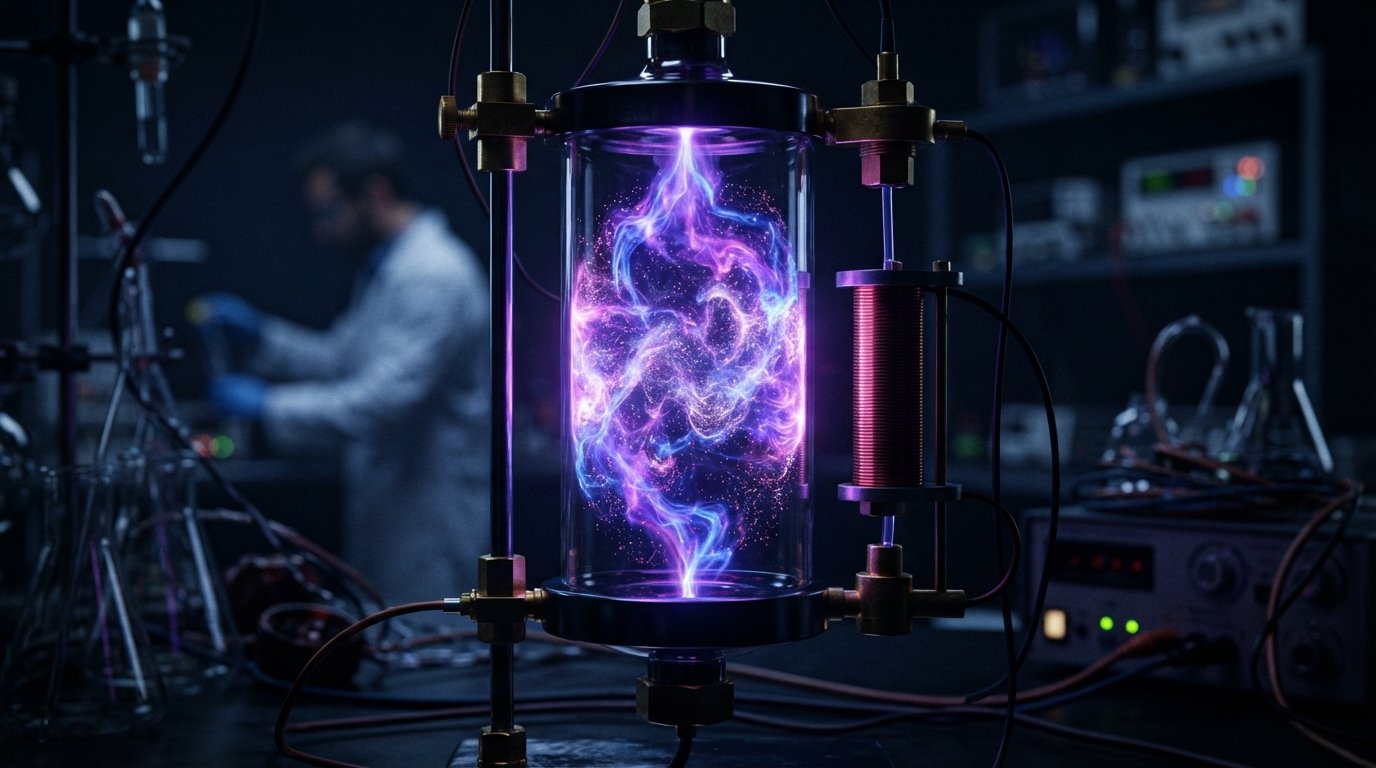
Blood samples were drawn immediately before and after both sessions. Free radical levels were measured using electron paramagnetic resonance spectroscopy — an extremely sensitive technique. Clot structure was analyzed at the microscopic level as clots actually formed.
What Happened Inside The Blood
During the quiet resting session: blood chemistry remained completely stable. Nothing changed.
During the stress test: two things happened simultaneously.
Free radical levels surged. Specifically, levels of the ascorbate free radical — a validated marker of oxidative stress — rose significantly, confirming that acute psychological stress was triggering rapid oxidative stress throughout the body.
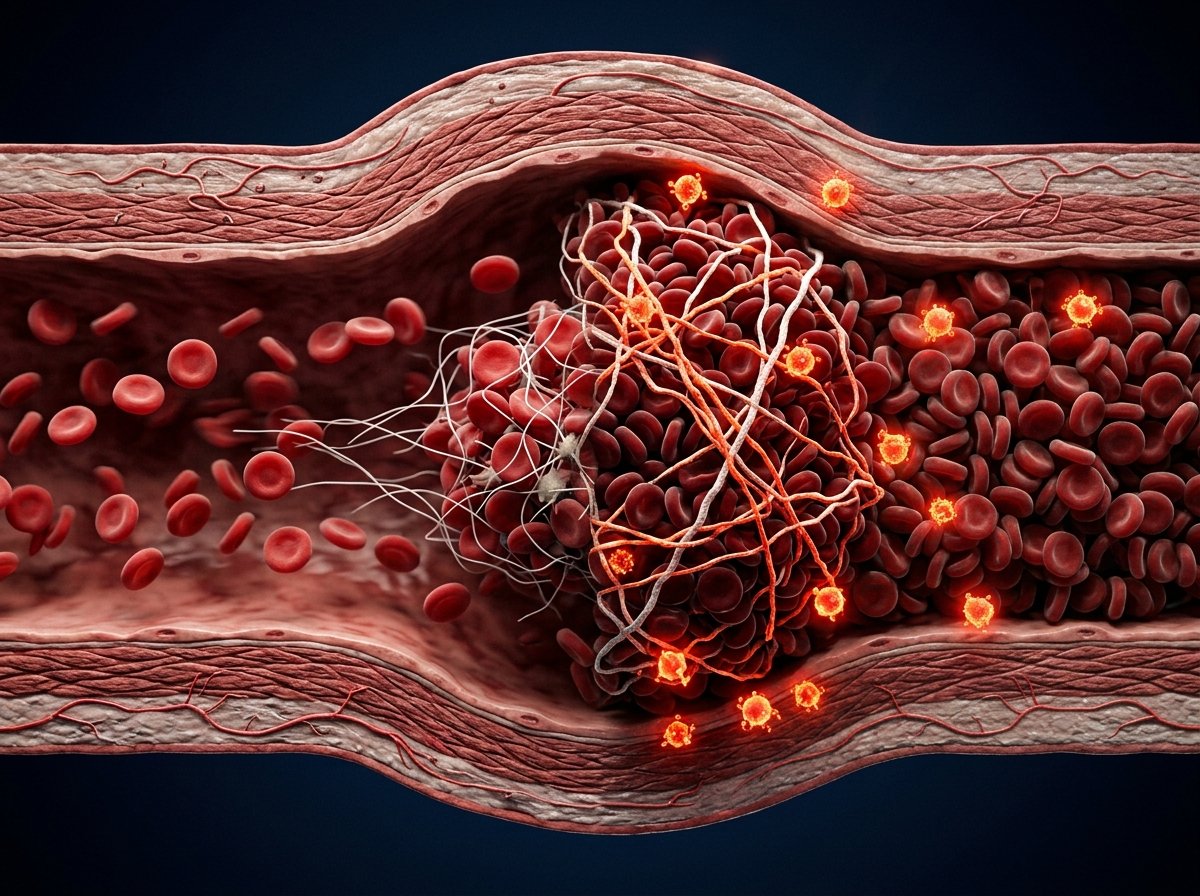
Blood clot architecture transformed. The clots that formed after the stress test were:
- Larger than those formed at rest
- Denser — more compactly structured
- More tightly packed with fibrin — the protein that provides clots with their structural framework
The intrinsic coagulation pathway — one of the body’s internal clot-initiating mechanisms — showed evidence of activation.
Together, these findings indicate that the blood had shifted into what scientists call a hypercoagulable state — a condition where clotting is more likely to occur than normal.
A Key Theory Ruled Out
Perhaps as important as what the researchers found is what they didn’t find.
Blood viscosity — the thickness and concentration of blood — did not change during the stress test. This directly contradicts the haemoconcentration hypothesis, which proposed that stress primarily works by thickening and concentrating blood.
Instead, the evidence points to something more specific: stress alters the quality and architecture of blood clots themselves, through a free radical cascade initiated by the stress response. The blood doesn’t necessarily become thicker — it becomes more structurally primed to form dangerous clots.
“Our findings suggest that stress alters the quality and architecture of the clot itself,” said Dr. Fall. “This provides new evidence that even brief periods of psychological stress can trigger rapid biological changes associated with increased clotting potential.”
What This Doesn’t Mean
The researchers are careful and appropriately cautious about interpretation.
This study involved eight healthy young men. That is a very small sample — intentional in mechanistic studies designed to isolate specific biological processes rather than detect population trends, but still limited in generalizability.
Larger studies involving women, older adults, and people with existing cardiovascular disease will be needed to determine how widely these findings apply across different populations. And the presence of a biological change — even a significant one — does not mean a heart attack or stroke is imminent.
Cardiovascular disease is complex. A stressful presentation or difficult day at work will not immediately cause a cardiac event in a healthy person. These changes are part of a chronic cumulative picture, not a single acute trigger.
Why This Research Matters
What this study offers — and what has been missing from the field until now — is a plausible, testable, specific biochemical mechanism connecting psychological stress to cardiovascular risk.
If free radical production is the upstream master switch that triggers blood clotting changes during stress, then:
- Antioxidant interventions might reduce cardiovascular risk from chronic stress — a hypothesis that can now be directly tested
- Targeting oxidative stress pathways may prove more effective than purely psychological stress management approaches for protecting cardiovascular health
- The timing and speed of these changes suggests that even acute, brief stress events may have real physiological consequences that accumulate over a lifetime
“Rather than focusing solely on the psychological experience of stress, future research could explore whether targeting the underlying biochemical pathways can help protect the cardiovascular system from some of stress’s physical effects,” Dr. Fall suggested.
The Bottom Line
Psychological stress doesn’t stay in your head. It enters your bloodstream within minutes, triggers a free radical surge, and physically changes the architecture of your blood clots — making them larger, denser, and more structurally capable of causing harm.
This isn’t abstract theory. It was captured happening in real time, in controlled laboratory conditions, measured with precision at the molecular level.
Stress is not just a feeling. It is a biological event with measurable physical consequences — and understanding exactly how it works is the first step toward doing something about it. 🫀🧬
Source: University of South Wales / The Conversation — June 2026
Lead Researcher: Dr. Lewis Fall, Senior Lecturer in Human Physiology, University of South Wales
Key Methodology: Randomised controlled crossover study; electron paramagnetic resonance spectroscopy; Trier Social Stress Test