








Joint injuries are common, but what happens in the weeks and months after an injury can determine whether that joint fully recovers or gradually develops post-traumatic osteoarthritis — a chronic, painful condition that affects millions of people following knee, ankle, and other joint injuries.
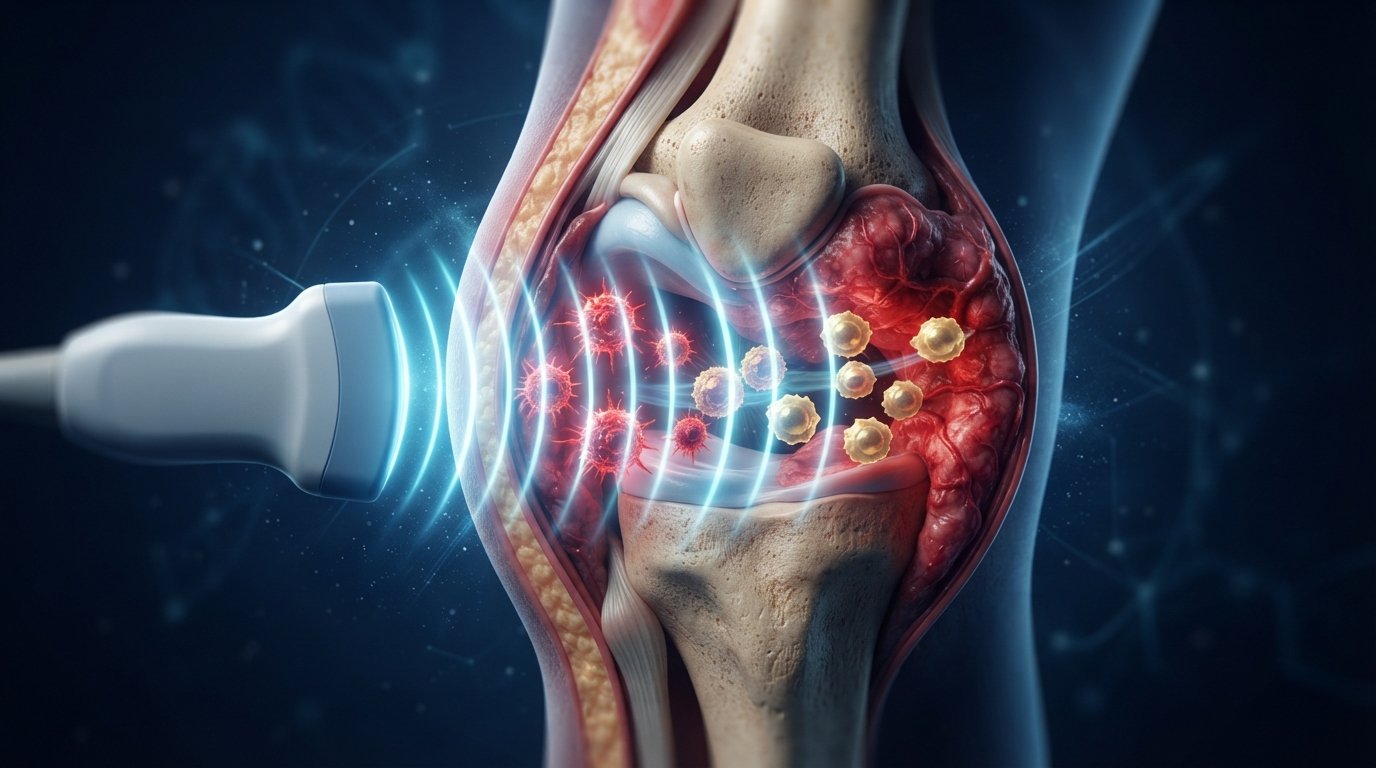
New research from The University of Alabama in Huntsville (UAH) suggests a surprisingly simple, non-invasive tool may help influence that outcome: low-intensity ultrasound.
Published in the Nature journal Scientific Reports, the study found that continuous low-intensity ultrasound may help shift the immune system’s response after joint injury away from prolonged inflammation and toward genuine tissue repair.
Understanding The Immune Response After Joint Injury
To understand why this research matters, it helps to understand what actually happens inside a joint after injury.
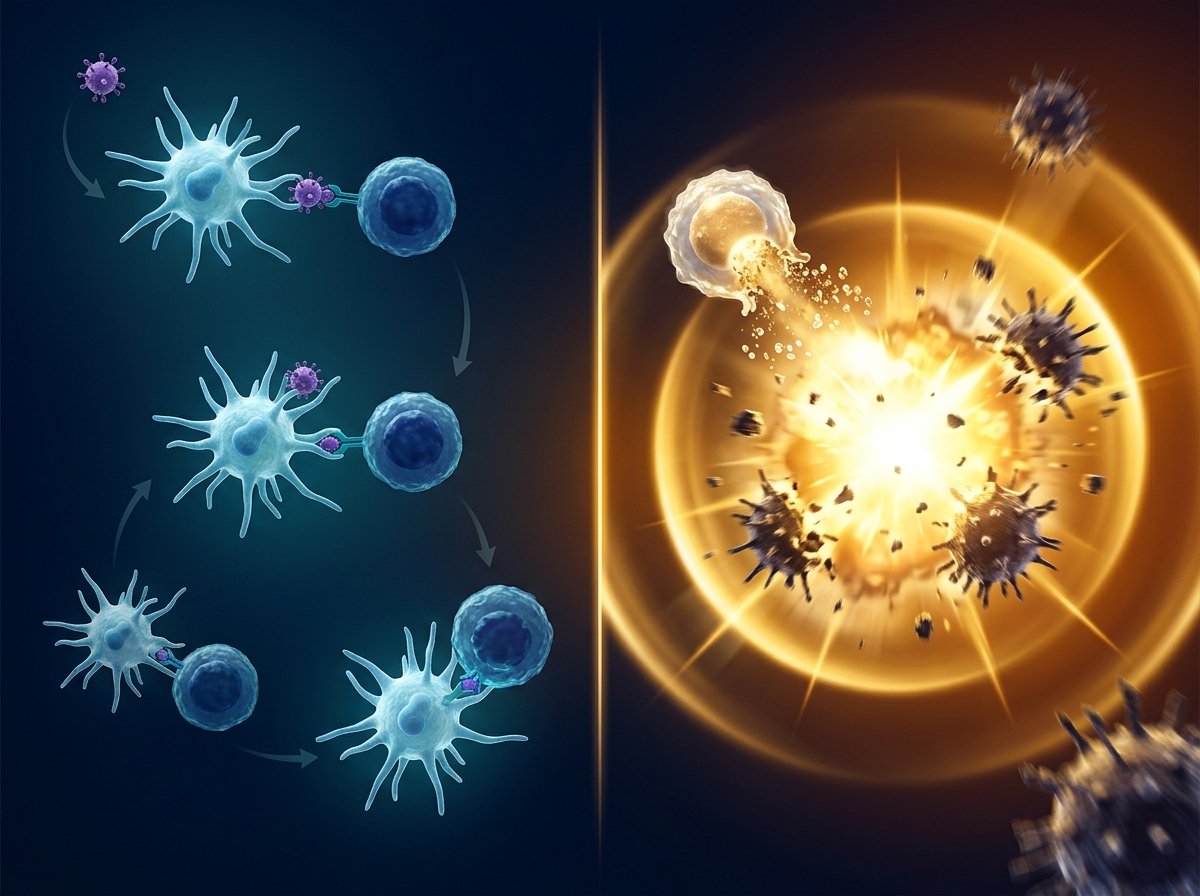
The body relies on specialized immune cells called macrophages to manage both the initial defense response and the later repair process. According to lead researcher Dr. Anuradha Subramanian, professor of chemical and materials engineering at UAH, “Following injury, the body recruits inflammatory ‘defender’ macrophages (M1) to clear damaged tissue and healer macrophages (M2) to support repair and recovery.”
This two-phase response is normal and necessary. M1 macrophages arrive first, clearing debris and fighting potential infection through active inflammation. M2 macrophages then take over, supporting tissue repair and helping the joint heal.
Why The Human Body Has So Many Design Flaws — And Why That’s Actually A Fascinating Story
The problem arises when this transition doesn’t happen properly. “Persistent dominance of defender macrophages can create a prolonged inflammatory environment that contributes to post-traumatic osteoarthritis,” Subramanian explains.
In simple terms: the immune system’s “attack mode” is essential immediately after injury, but if it never switches into “repair mode,” the ongoing inflammation itself becomes the problem — gradually damaging joint tissue and setting the stage for long-term arthritis.
Why This Matters For Anyone Recovering From Joint Injury
Post-traumatic osteoarthritis is a genuinely significant clinical problem. It develops in a substantial proportion of people following joint injuries such as ACL tears, meniscus damage, and joint fractures — often years after the original injury has seemingly healed.
Currently, there is no reliable way to prevent this delayed-onset arthritis from developing. Most current interventions focus on managing symptoms after osteoarthritis has already taken hold, rather than intervening early enough to change the injury’s long-term trajectory.
This is exactly the gap the UAH research team set out to address — looking for a non-drug, non-invasive intervention that could be applied early after injury, potentially changing how the immune system responds during the critical healing window.
The Research: Testing Ultrasound On Immune Cells
The study, led by Subramanian, combined biological research conducted by Dr. Shahid Khan during his doctoral studies, computational and statistical analysis developed by Dr. Satyaki Roy, professor of mathematical sciences, and contributions from graduate student Owen Trippany. The research was funded through a National Institutes of Health R01 grant.
The team specifically wanted to determine whether continuous low-intensity ultrasound could encourage macrophages to transition from their inflammatory M1 state toward the reparative M2-like state.
“In an ‘M1’ state, macrophages promote inflammation to fight damage or infection, but prolonged M1 activity can also harm healthy tissue,” Subramanian notes. “In contrast, ‘M2-like’ macrophages support tissue repair and recovery. Shifting macrophages toward an M2-like state is important, because it may help reduce chronic inflammation while encouraging healing in damaged joints.”
Roy emphasized why this specific approach was worth investigating. “Post-traumatic osteoarthritis is driven in part by persistent inflammation that limits tissue repair and accelerates joint degeneration,” he said. “Our team is interested in continuous low-intensity ultrasound because it offers a non-pharmacological, non-invasive approach that may help regulate immune cell behavior and promote a more reparative healing environment in injured joints.”
Building A More Realistic Injury Model
One of the more methodologically important aspects of this study was how the researchers simulated joint injury in the lab.
Rather than relying solely on conventional laboratory methods to trigger inflammation, the team used fibronectin fragments — molecules that are naturally generated as damaged tissue breaks down after a real joint injury. This approach created a model that more accurately reflects the actual biological environment present inside a joint after trauma, rather than an artificial inflammatory trigger that might not represent real injury conditions.
The researchers also employed transcriptomics — the large-scale study of gene activity — combined with an advanced technique called differential clustering. Rather than examining individual genes one at a time, this method identifies groups of genes that change their behavior together, offering a much broader and more coordinated picture of how immune cells respond to ultrasound stimulation.
“This allowed us to study not only which genes changed, but also how groups of genes changed their coordinated behavior in response to ultrasound stimulation,” Roy explained.
The Results: Reduced Inflammation, Increased Repair Markers
The findings were consistent with the researchers’ hypothesis. Continuous low-intensity ultrasound treatment lowered biological markers linked to inflammation, while simultaneously increasing markers associated with the more reparative, M2-like macrophage state.
In other words, exposing the inflamed macrophage cells to this gentle ultrasound stimulation appeared to nudge them measurably toward the healing-supportive state — exactly the transition that seems to fail or become delayed in people who go on to develop post-traumatic osteoarthritis.
What This Means For The Future Of Joint Injury Treatment
It’s important to understand where this research currently stands: this is laboratory-based cell research, not a clinical treatment available for patients today. The results are promising, but significant additional research is needed before this approach could become part of standard joint injury care.
Still, the implications are genuinely exciting from a physiotherapy and rehabilitation perspective. If continuous low-intensity ultrasound proves effective in later animal and human studies, it could offer:
- A non-drug alternative or complement to current anti-inflammatory approaches following joint injury
- A non-invasive treatment that could potentially be incorporated into existing physiotherapy and rehabilitation protocols
- A way to intervene early after injury, during the critical window when the immune response is being established, rather than waiting to treat established osteoarthritis
- Reduced reliance on medications that carry their own side effect profiles when used long-term
“The next steps will involve validating these findings in animal models of early post-traumatic osteoarthritis and studying how ultrasound-based modulation affects long-term tissue repair in joint injury settings,” Subramanian said.
Key Takeaways
- Joint injuries trigger an immune response involving inflammatory M1 macrophages and reparative M2 macrophages
- Chronic dominance of inflammatory M1 macrophages contributes to post-traumatic osteoarthritis
- Continuous low-intensity ultrasound was shown, in laboratory cell studies, to shift macrophages from the inflammatory M1 state toward the reparative M2-like state
- This is early-stage research; results have not yet been tested in animal models or humans
- If validated, this non-invasive, drug-free approach could eventually help prevent osteoarthritis after joint injury, rather than only treating it after it develops
When To See A Healthcare Professional
If you’ve experienced a joint injury, consult a physiotherapist or physician promptly. Early, appropriate rehabilitation is currently the best evidence-based approach for reducing long-term joint complications, and a professional can guide you through a recovery plan tailored to your specific injury.
⚠️ Medical Disclaimer: This article is for informational purposes only and is based on early-stage laboratory cell research. It does not constitute medical advice and does not represent an available clinical treatment. Always consult a qualified healthcare professional regarding joint injuries or arthritis concerns.
Source: The University of Alabama in Huntsville — July 12, 2026
Journal Reference: Shahid Khan, Owen Trippany, Anuradha Subramanian, Satyaki Roy. Continuous low-intensity ultrasound influences the transcriptomic profile in M1 macrophages by downregulating inflammation and promoting M2-like markers. Scientific Reports, 2026.
DOI: 10.1038/s41598-026-53228-6