






Nanoplastics have already raised significant concern because people can ingest them directly through food, water, and even the air. New research from Virginia Tech reveals a second, less visible danger — these microscopic plastic particles may be actively helping harmful bacteria become stronger and more difficult to eliminate from the water systems we depend on every day.
Published in the journal Water Research, the study was led by Jingqiu Liao, assistant professor of civil and environmental engineering at Virginia Tech, working with an international team of researchers from China, Switzerland, and the United States.
What Are Nanoplastics?
Nanoplastics are an extremely small category of microplastic particles, ranging from roughly one to 1,000 nanometers in size — far too small to see with the naked eye. They form as larger plastic debris breaks down over time in the environment, and they’ve been detected virtually everywhere researchers have looked: in oceans, soil, food, and drinking water systems around the world.
Why The Human Body Has So Many Design Flaws — And Why That’s Actually A Fascinating Story
“It is very important to better understand the adverse effects of the nanoplastics on human health, and not just in humans but also in the environment, which indirectly influences human health,” Liao explained.
This study specifically examined how nanoplastics interact with bacterial biofilms — a topic that had received relatively little research attention until now, despite its direct relevance to public drinking water safety.
Understanding Bacterial Biofilms
To understand why this research matters, it helps to understand what a biofilm actually is.
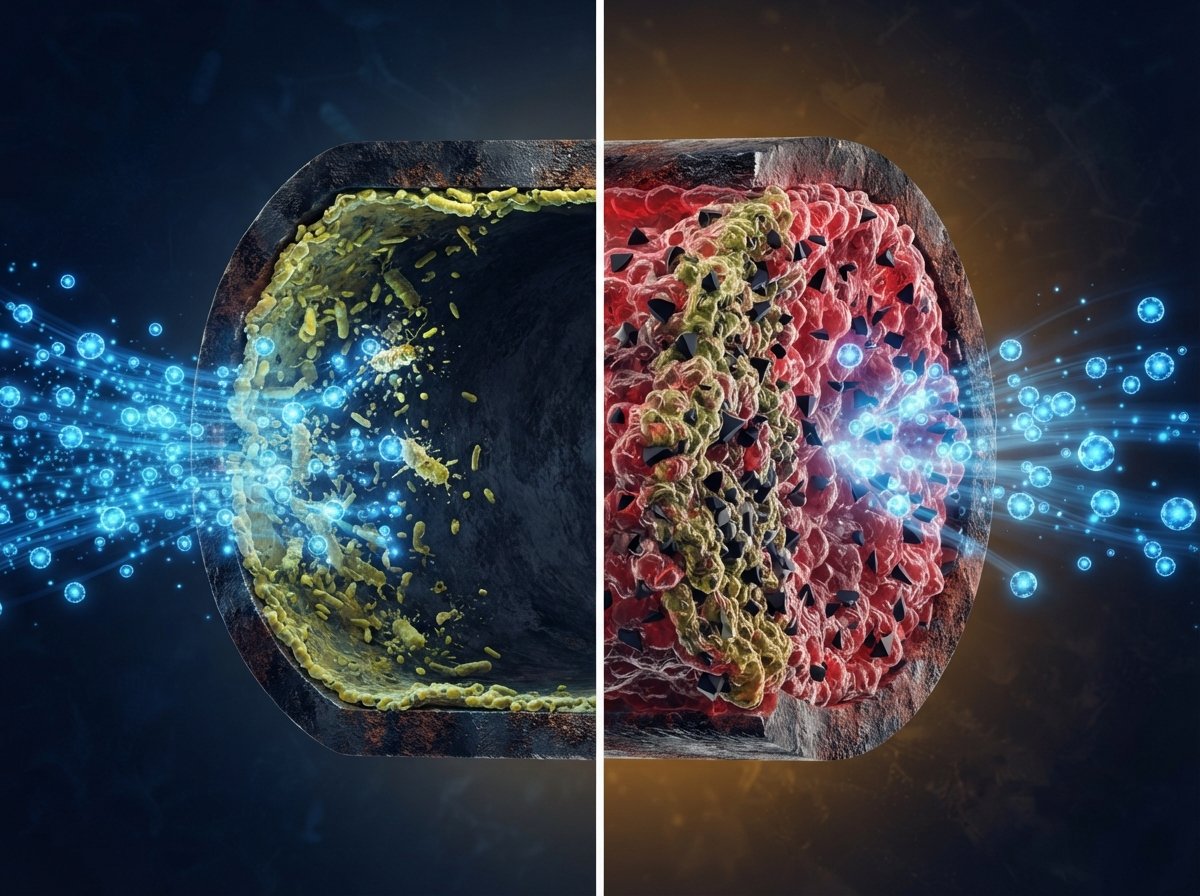
Biofilms form when bacteria attach themselves to surfaces — including the inner walls of water pipes — and produce a protective, slimy material around themselves. This coating shields the bacterial community from environmental threats, including the disinfectants water treatment systems rely on to keep drinking water safe.
Biofilms aren’t always harmful. In some contexts, they actually help remove undesirable substances from water. But inside drinking water distribution systems, biofilms pose a genuine risk, since some of the bacteria living within them can cause disease.
The situation is further complicated by bacteriophages — viruses that specifically infect bacteria. Before this research, scientists understood relatively little about how nanoplastics might influence the complex relationships between biofilms, the bacteria within them, and these bacteria-infecting viruses.
The Experiment: Exposing Biofilms To Nanoplastics
The research team studied a biofilm made up of two well-known bacterial species: E. coli and Pseudomonas aeruginosa. When this biofilm was exposed to nanoplastics, the researchers observed three distinct bacterial responses occurring simultaneously.
First — bacterial communication and biofilm thickening: Different bacteria within the biofilm “talked” with one another through a process called quorum sensing, releasing chemical signals that triggered the biofilm to become thicker, heavier, and more protective.
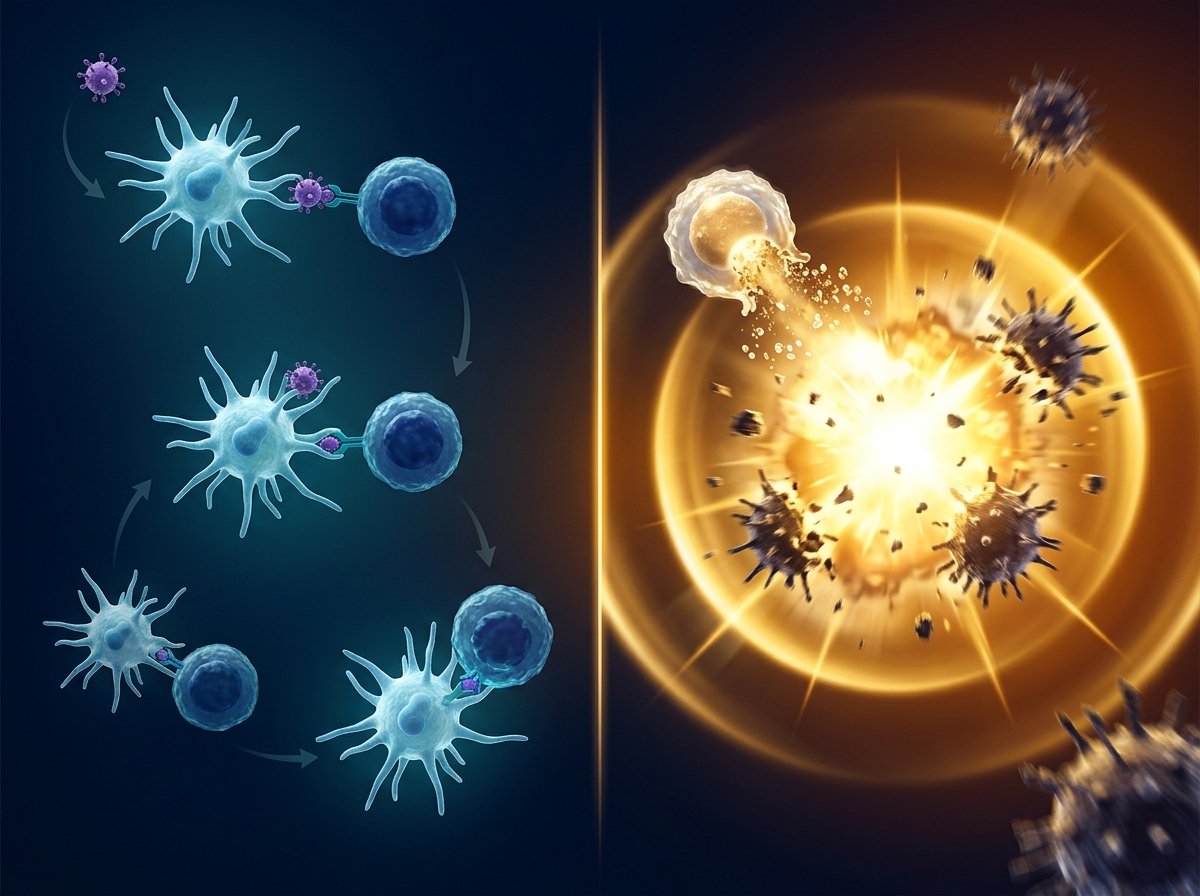
Second — activation of dormant viruses: Prophages — bacteriophages that had inserted their own genetic material directly into the bacterial hosts’ genomes and remained dormant — became activated. Once triggered, these prophages destroyed the bacterial cells they inhabited while producing large numbers of new virus particles in the process.
Third — antiviral bacterial defense: In response to this viral activation, the bacteria deployed their own defense mechanism, using CRISPR (clustered regularly interspaced short palindromic repeats) — a natural bacterial immune system that targets and destroys specific viral genetic sequences — to fight back against the activated prophages.
“The primary process that we were particularly interested in is how the bacteria and the bacteriophages interact with each other during the process when the nanoplastics influence the biofilm as a whole,” Liao said.
The Result: Tougher, More Resistant Biofilms
The combined effect of these three simultaneous processes was significant: exposure to nanoplastics increased the physical strength of the biofilm and made it more resistant to disinfectants — the chemical agents water treatment facilities rely on to keep bacterial contamination under control.
“When the nanoplastics interact with the biofilm and the bacteria inside them, they can strengthen the biofilm and make it more resistant to any kind of measures that are going to keep the water clean,” Liao explained.
The research team concluded that “the increased mechanical strength of the biofilm and its resistance to the disinfectants highlight a potential challenge for water treatment and distribution systems, as nanoplastics may increase the formation of difficult-to-eradicate biofilms on the surface of some water treatment and distribution systems.”
In practical terms: nanoplastics appear to be making it easier for stubborn, disinfectant-resistant biofilms to develop on the surfaces used throughout water treatment and delivery infrastructure — increasing the difficulty of removing them and potentially increasing the risk of disease-causing bacteria surviving standard treatment processes.
Why This Matters For Public Health
Liao’s broader research background focuses on microbial ecology and the spread of antibiotic resistance — giving important context to why this specific finding is concerning.
“The nanoplastics can make the antimicrobial-resistant pathogens better survive, which could be harmful to the environment and would have public health implications,” Liao noted.
This connects to a larger, well-documented global health concern: antimicrobial resistance. Bacteria that survive disinfection and antibiotic treatment more effectively pose an increasing threat to public health worldwide. If widespread environmental nanoplastic contamination is inadvertently helping resistant bacteria survive and thrive within water infrastructure, that represents a meaningful and previously underappreciated contributing factor to this broader resistance challenge.
What Comes Next
Liao emphasized that additional research is needed to fully understand the underlying molecular processes driving these bacterial responses, particularly in more complex, real-world biofilms containing multiple microbial species beyond the two studied in this initial experiment.
She also noted that particle size may play an important role in these dynamics. Microplastics — which are larger than nanoplastics — could potentially affect bacteria-phage interactions differently, representing another important direction for future research.
“Overall, our findings provide novel insights into the interplay between nanoplastics and bacterium-phage dynamics, highlighting increased microbial risks associated with waterborne nanoplastics,” Liao said.
What This Means Going Forward
This research adds an important new dimension to ongoing concerns about plastic pollution and drinking water safety. It’s no longer just about the direct health effects of ingesting plastic particles — nanoplastics may also be indirectly compromising the effectiveness of the water treatment infrastructure designed to protect public health from bacterial contamination.
For water treatment facilities and public health researchers, these findings underscore the importance of continuing to monitor nanoplastic contamination levels in source water and distribution systems, and of factoring nanoplastic interactions into how treatment protocols and disinfection strategies are designed and evaluated going forward.
Key Takeaways
- Nanoplastics in drinking water systems can strengthen bacterial biofilms, making them physically tougher and more resistant to disinfectants
- Exposure triggers three simultaneous bacterial responses: increased biofilm thickening through bacterial communication, activation of dormant viruses (prophages), and CRISPR-based antiviral bacterial defenses
- Stronger, disinfectant-resistant biofilms could make it harder for water treatment systems to eliminate disease-causing bacteria
- This research adds a new dimension to concerns about antimicrobial resistance and environmental nanoplastic contamination
- Further research is needed to understand these effects in more complex, real-world biofilms and across different plastic particle sizes
Source: Virginia Tech — July 17, 2026
Journal Reference: Haibo Wang, Hui Chen, Chujin Ruan, Jingqiu Liao, Cory Schwarz, Baoyou Shi, Pedro J.J. Alvarez, Pingfeng Yu. Nanoplastics induce prophage activation and quorum sensing to enhance biofilm mechanical and chemical resilience. Water Research, 2026; 288: 124712.
DOI: 10.1016/j.watres.2025.124712
Slug: nanoplastics-drinking-water-bacteria-biofilm-resistance-2026