





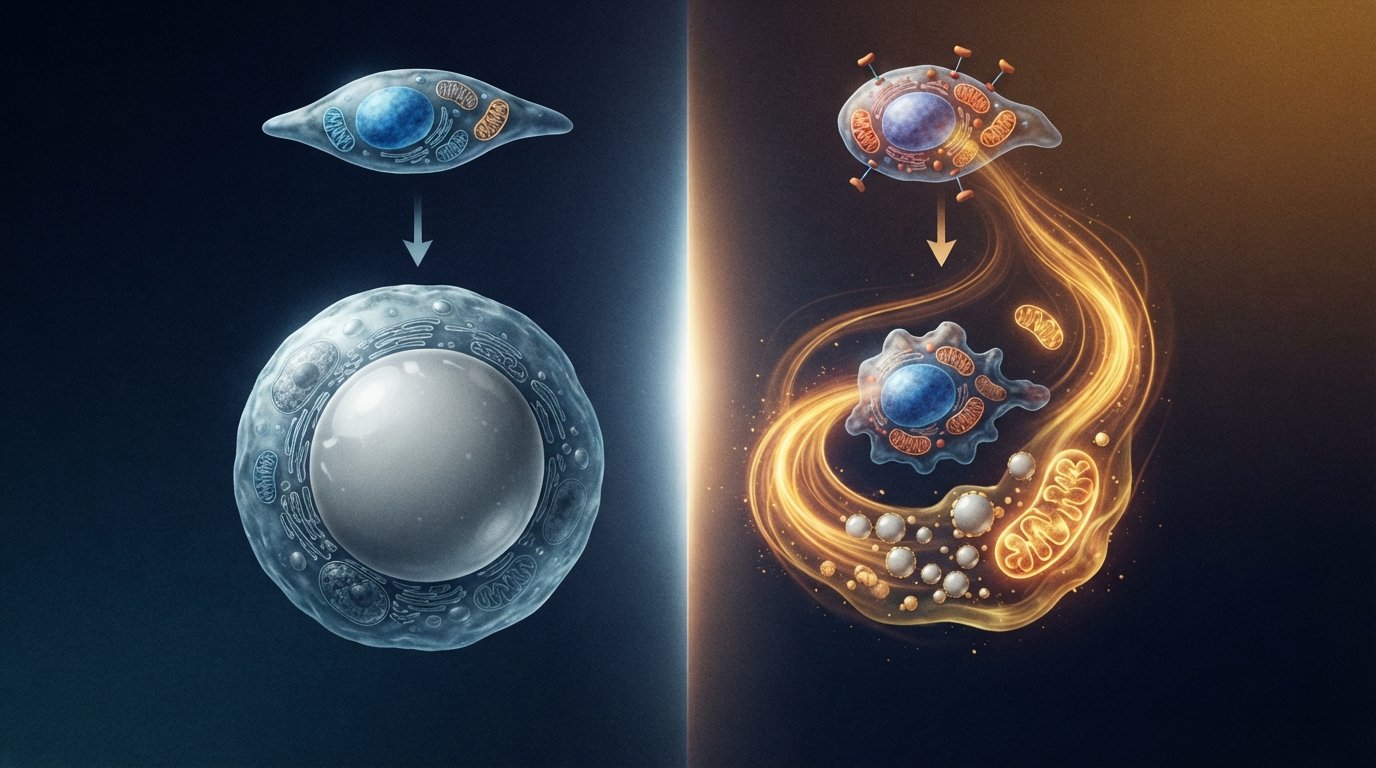
Modern weight-loss medications have genuinely changed obesity treatment for millions of people. But they come with a well-documented trade-off: alongside fat loss, many people also lose meaningful amounts of muscle.
Researchers at the Weizmann Institute of Science just identified a biological mechanism that may help address exactly that problem — a protein that appears to control whether cells burn fat for energy or store it away.
Meet Mitch: The Protein Behind The Discovery
The protein is called MTCH2, nicknamed “Mitch” by the research team. Published in The EMBO Journal, the new study builds on years of earlier work by Prof. Atan Gross and colleagues in Weizmann’s Immunology and Regenerative Biology Department.
The story actually began with an unexpected observation in mice. When researchers suppressed Mitch specifically in mouse muscle tissue, something surprising happened: the animals didn’t just avoid obesity. They developed more muscle fibers, showed greater endurance, performed better under physical stress, and even had improved heart function.
No Surgery, No Daily Pills — Just One Shot That Regenerated An Arthritic Joint In Under Two Months
That raised an obvious question. How could disabling a single protein protect against obesity and boost athletic performance at the same time?
The Mitochondria Connection
To answer that question, the researchers turned to mitochondria — the small structures inside cells often called the “powerhouses” of the cell, because they generate most of the energy cells need to function.
Mitochondria can exist in two general states:
- Fused networks — large, interconnected structures that produce energy efficiently
- Fragmented units — smaller, separated structures that are less efficient
When mitochondria become less efficient at producing energy, cells compensate by consuming more fuel — burning through fats, carbohydrates, and proteins at a higher rate to meet their energy needs.
Gross’s team discovered that Mitch regulates mitochondrial fusion. This gave them a working theory for what was happening in the mice — and the next step was testing whether the same mechanism held true in human cells.
What Happened When Mitch Was Removed From Human Cells
Led by doctoral student Sabita Chourasia, the team used genetic engineering to eliminate Mitch from human cells and closely tracked what followed.
The mitochondrial networks in these cells broke apart into separate, smaller units — exactly as predicted. Energy production became less efficient, effectively putting the cells into a constant, low-level energy shortage.
That might sound like a problem. But for obesity research, this kind of inefficiency can actually be beneficial — because cells struggling to produce energy have to consume more fuel to keep up.
“We examined, every few hours, the effect that had on more than 100 substances taking part in metabolism in human cells,” explained Chourasia. “We saw an increase in cellular respiration, the process in which the cell produces energy from nutrients, such as carbohydrates and fats, using oxygen. This explains the increase in muscular endurance in previous experiments using mice.”
Cells Without Mitch Start Burning More Fat
Because these cells needed more fuel just to function normally, the researchers observed a clear shift in what they were consuming.
- Greater breakdown of fats, carbohydrates, and amino acids
- A significant shift toward fat as the primary fuel source, rather than the carbohydrates and proteins typical cells rely on more heavily
“We discovered that deleting Mitch led to a major drop in fats in membranes,” said Gross. “At the same time, we saw an increase in fatty substances used to produce energy, and we realized that the fat was being broken down from the membrane to be used as fuel. In other words, we showed that Mitch determines the fate of fat in human cells.”
Mitch Also Blocks New Fat Cells From Forming
The research team found a second, equally significant effect.
Prior studies had shown that women with obesity tend to have elevated levels of Mitch, which led the team to investigate whether the protein also influences the creation of new fat cells.
New fat cells originate from progenitor cells — immature cells that, under the right conditions, accumulate fat and mature into full fat-storing cells through a process called differentiation.
When Mitch was removed from these progenitor cells, that maturation process became far more difficult.
“When we deleted Mitch from the progenitor cells, we discovered that the environment created in these cells was not conducive to the synthesis of new fats,” Gross explained. “Reducing the ability to synthesize membranes prevents the cells from growing, developing and reaching the point where differentiation is possible.”
He continued: “The process of fat accumulation requires a large amount of available energy, but in cells without Mitch, there is a shortage of energy. In addition, the expression of genes necessary for differentiation is suppressed, and there is a shortage of the substances vital for this process to occur. As a result, differentiation of new fat cells is reduced, along with fat accumulation.”
In short: cells without Mitch didn’t just burn more of the fat they already had — they also became far less capable of building new fat cells in the first place.
What This Means — And What It Doesn’t (Yet)
It’s important to be clear-eyed about where this research stands. This study was conducted entirely in human cells in a laboratory setting — not in living people, and not as a tested treatment. Findings at the cellular level, however promising, do not automatically translate into safe or effective therapies in humans.
What this discovery does offer is a credible, well-characterized biological pathway connecting mitochondrial function, energy expenditure, and fat cell formation — one that scientists can now use as a foundation for future drug development research.
If future research can find a safe way to target Mitch in the body, it could offer a genuinely novel angle on obesity treatment: one that increases fat burning and limits new fat cell formation, while potentially avoiding the muscle loss associated with current weight-loss medications.
Key Takeaways
- Researchers identified a protein, MTCH2 (“Mitch”), that regulates whether cells burn fat or store it
- Disabling Mitch in human cells increased fat and carbohydrate burning and reduced fat cell formation
- Earlier mouse studies showed Mitch-deficient animals were leaner, more athletic, and obesity-resistant — without losing muscle
- The mechanism works through mitochondrial fragmentation, forcing cells to burn more fuel to meet energy demands
- This is early-stage, cell-based research — not a proven human treatment
- The discovery may eventually help address a major limitation of current obesity drugs: loss of muscle mass alongside fat
When To See A Healthcare Professional
This research does not represent an available treatment. If you are managing your weight or considering weight-loss medication, speak with your doctor or a registered dietitian about:
- Evidence-based treatment options currently approved for your situation
- Preserving muscle mass during weight loss through resistance exercise and adequate protein intake
- Underlying causes of weight gain that may need individual evaluation
⚠️ Medical Disclaimer: This article is for informational purposes only and reflects early-stage laboratory research conducted in human cells and mouse models. It is not a proven human treatment and should not be interpreted as medical advice. Always consult a qualified healthcare professional for guidance on weight management or any medical condition.
Have you struggled with muscle loss during weight loss efforts? What strategies have helped you preserve strength while losing fat? Share your experience in the comments below.
Source: Weizmann Institute of Science — July 2, 2026
Journal Reference: Sabita Chourasia, Christopher Petucci, Clarissa Shoffler, et al. MTCH2 controls energy demand and expenditure to fuel anabolism during adipogenesis. The EMBO Journal, 2025; 44 (4): 1007.
DOI: 10.1038/s44318-024-00335-7