






Here is a fact that will make you stop and think.
Cotton candy — the fairground treat spun from almost nothing — has a density of about 0.05 grams per cubic centimeter. Two newly discovered planets, each roughly the size of Jupiter, are even less dense than that.
Not slightly less. Measurably, verifiably, extraordinarily less.
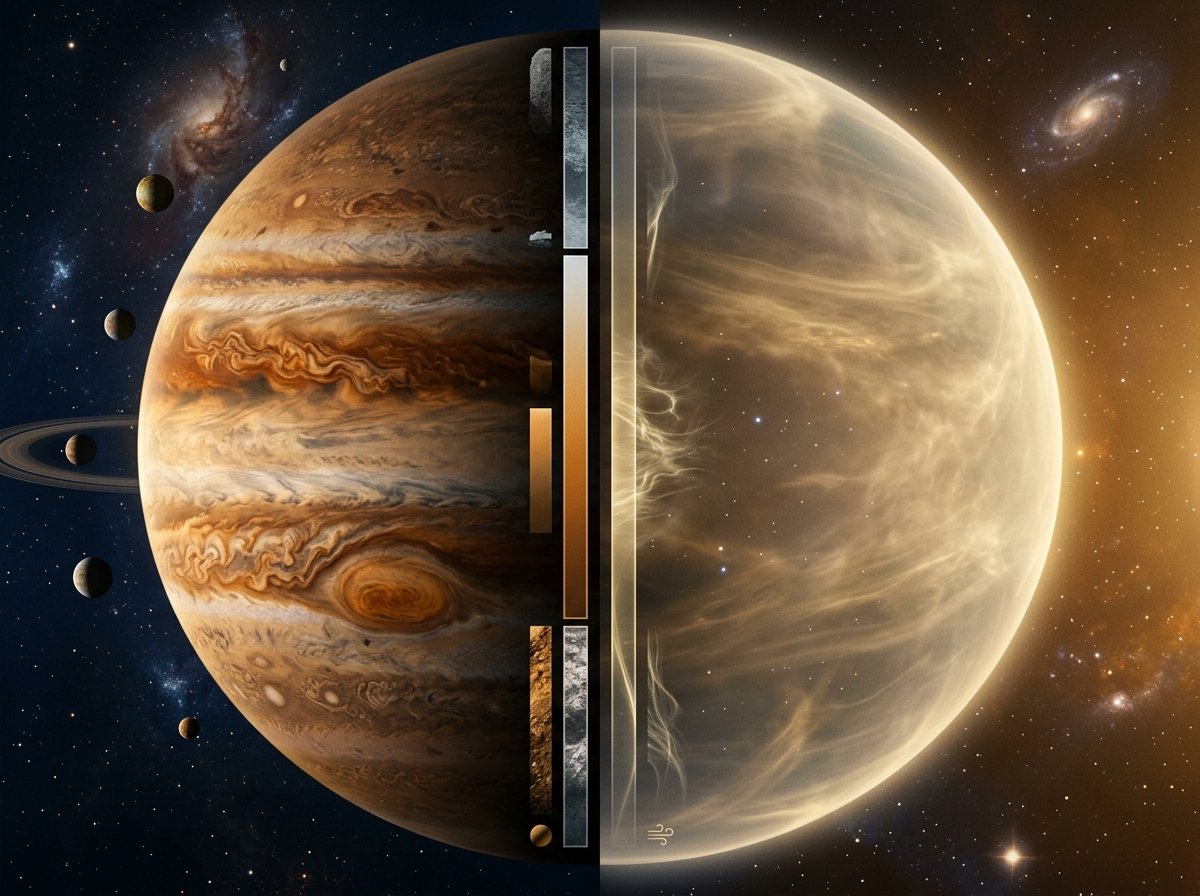
TOI-791 b has a density of just 0.038 grams per cubic centimeter. TOI-791 c measures 0.047. Jupiter, the planet we typically use as the benchmark for large gas worlds, has a density of 1.33 — making it between 28 and 35 times denser than either of these newly confirmed worlds.
Earth, for reference, averages 5.5 grams per cubic centimeter.
These are not edge cases or measurement anomalies. These are two of the fluffiest, most improbable planets ever confirmed anywhere in the galaxy — and they orbit the same star.
Scientists Built A Skin-Like AI Patch That Detects Heart Attacks In Milliseconds
What Are Super-Puff Planets?
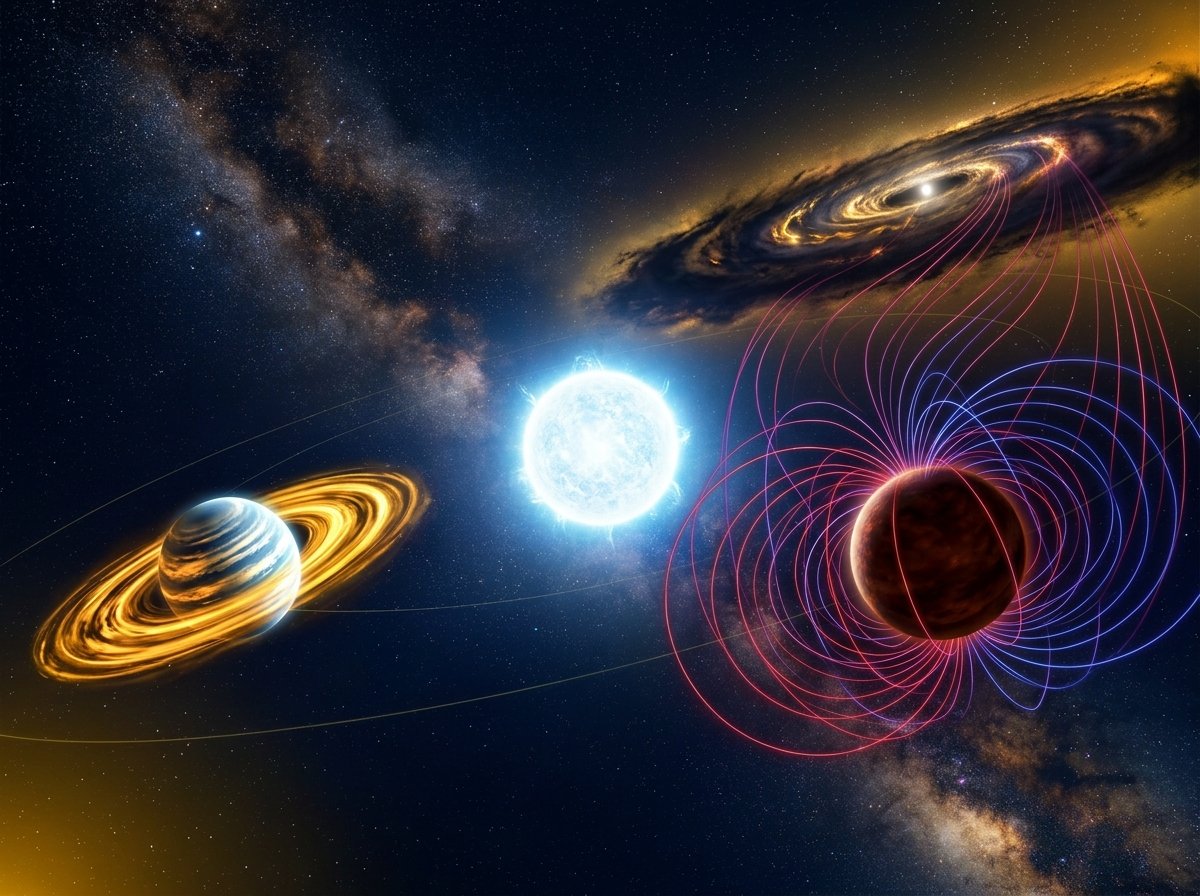
Super-puff planets are a rare class of gas giant exoplanets defined by one extraordinary characteristic: they are enormous in physical size but contain almost no mass relative to that size.
Think of it this way. Imagine inflating a balloon to the size of a house but filling it with barely anything. The balloon is huge. It would cast an enormous shadow. But if you tried to weigh it, the reading would be almost nothing. That is roughly what a super-puff planet is — a Jupiter-scale world whose atmosphere has puffed up to extraordinary volume around a surprisingly small core.
Only a handful of super-puff exoplanets have ever been confirmed. Finding two in the same planetary system is so unusual that researchers immediately recognized this as a scientifically exceptional opportunity.
“Only a handful of these super-puffy planets are known, and it is even rarer to find two in the same system,” said lead author Dr. George Dransfield of the University of Oxford. “Their extremely low densities make them fascinating targets for understanding how planetary systems form and evolve.”
How These Planets Were Found
The discovery required eight years of observations and telescopes on multiple continents — plus a critical contribution from an unlikely location: Antarctica.
Citizen scientists first flagged the system in the Planet Hunters TESS project — a global initiative that enlists volunteers to search for planet-like signals in data from NASA’s Transiting Exoplanet Survey Satellite. Volunteers identified TOI-791 b in 2019 and TOI-791 c in 2023 as candidate planets worth following up.
Professional astronomers then spent years confirming and characterizing the planets using observatories around the world — but the decisive observations came from the ASTEP telescope at Concordia Station in Antarctica.
Antarctica’s polar winter gives astronomers something almost nowhere else on Earth can offer: months of uninterrupted darkness. That continuous night allowed the team to observe transits — the dimming of starlight as a planet crosses in front of its star — without the interruptions that would occur at any other observatory on the planet.
These particular transits last more than 11 hours each. The researchers confirmed these are the longest continuous planetary transits ever fully observed from the ground. Without Antarctica’s polar night, that observation would have been impossible.
A Rare Gravitational Dance
Beyond their extraordinary low densities, the two planets share another remarkable feature: they orbit their star in a precise gravitational relationship called a 5:3 mean-motion resonance.
For every five complete orbits that the inner planet TOI-791 b makes around their star, the outer planet TOI-791 c completes almost exactly three. Like two dancers locked in perfect timing across an enormous stage.
This resonance isn’t just cosmetically interesting. It means the planets’ gravity continuously tugs on each other as they orbit — creating small but measurable changes in the precise timing of each planet’s transit across the star’s face. By analyzing these transit timing variations, astronomers were able to estimate each planet’s mass with a precision that would otherwise have required direct measurement.
That gravitational interaction is also a historical record. Planetary resonances like this one typically form when planets migrate inward from their original formation location — they get “locked in” to the resonance as they slow down near their star. The 5:3 resonance of TOI-791 b and c is therefore a frozen snapshot of their migration history, telling astronomers something about where these planets came from and how they arrived at their current positions.
Only four other planetary systems are known to contain multiple super-puff planets. TOI-791 is among the most extraordinary of them.
How Do Planets This Light Even Exist?
Super-puff planet formation remains one of the most actively debated questions in planetary science. Several competing theories exist, and this system could help test them.
The leading explanation is atmospheric:
- These planets may have formed far from their star, in the cold outer regions of their protoplanetary disc where gas could accumulate rapidly around a solid core
- In those cold, distant conditions, enormous quantities of hydrogen and helium piled onto the forming planetary cores before the disc dissipated
- The planets then migrated inward to their current positions over millions of years
- Close to their star, the intense stellar radiation heats and expands those enormous atmospheres further — creating the extreme “puffed up” appearance we observe today
“Scientists believe these thick gaseous envelopes may have formed when the planets were much farther from their star, in colder regions of the protoplanetary disc where gas could rapidly accumulate around a solid planetary core,” the researchers explain.
Another possibility involves planetary tides — the gravitational flexing caused by the star and companion planets generating heat that expands the atmosphere from within.
The data collected so far cannot definitively distinguish between these scenarios. That’s exactly why the next step is so important.
What James Webb Will Reveal
The research team has proposed follow-up observations using the James Webb Space Telescope — the most powerful space observatory ever built.
JWST can analyze the chemical composition of planetary atmospheres by detecting how starlight filters through them during a transit. For TOI-791 b and c, this could reveal whether their atmospheres contain carbon-bearing, nitrogen-bearing, and oxygen-bearing chemical species — molecules that carry the fingerprint of where and how these planets formed.
“We propose to carry out space-based observations using the James Webb Space Telescope to assess if the puffy atmosphere contains carbon-, nitrogen-, and oxygen-bearing species, revealing new insight into how these unusual planets formed,” said Professor Amaury Triaud of the University of Birmingham.
The Bigger Picture
Two planets lighter than cotton candy, orbiting a star over a thousand light years away, discovered partly by citizen scientists, confirmed with telescopes scattered across multiple continents including Antarctica, and now targeted for humanity’s most powerful space telescope.
The story of TOI-791 b and c is already extraordinary. What JWST finds in their atmospheres could make it one of the most significant planetary discoveries of this decade.
The universe, it turns out, builds planets in ways that still manage to surprise us. 🌌🪐
Source: University of Oxford / Monthly Notices of the Royal Astronomical Society — June 26, 2026
Journal Reference: Georgina Dransfield, Antoine C Petit, Amaury H M J Triaud, Tristan Guillot, et al. ASTEP confirmation of a pair of long-period Jupiter-sized planets with extremely low densities transiting TOI-791. Monthly Notices of the Royal Astronomical Society, 2026; 549 (4).
DOI: 10.1093/mnras/stag864