








We don’t often think about the janitor inside our skulls. But every night, while we sleep, a tiny plumbing network powers up. It flushes out gunk. It clears debris. It literally cleans our brains. This system is called the glymphatic system. And as we age, it can get sluggish.
Now, a fresh study from Victoria University says exercise might be one of the best ways to keep that nightly cleanup humming. Physical activity, it turns out, doesn’t just build muscle or strengthen the heart. It powers the brain’s very own garbage disposal. That’s not poetic language. It’s biology.
The glymphatic system was only properly discovered about a decade ago. Before that, scientists didn’t know how the brain got rid of its waste. Your body has the lymphatic system. But the brain sits behind a blood-brain barrier, sealed off. So how does it take out the trash?
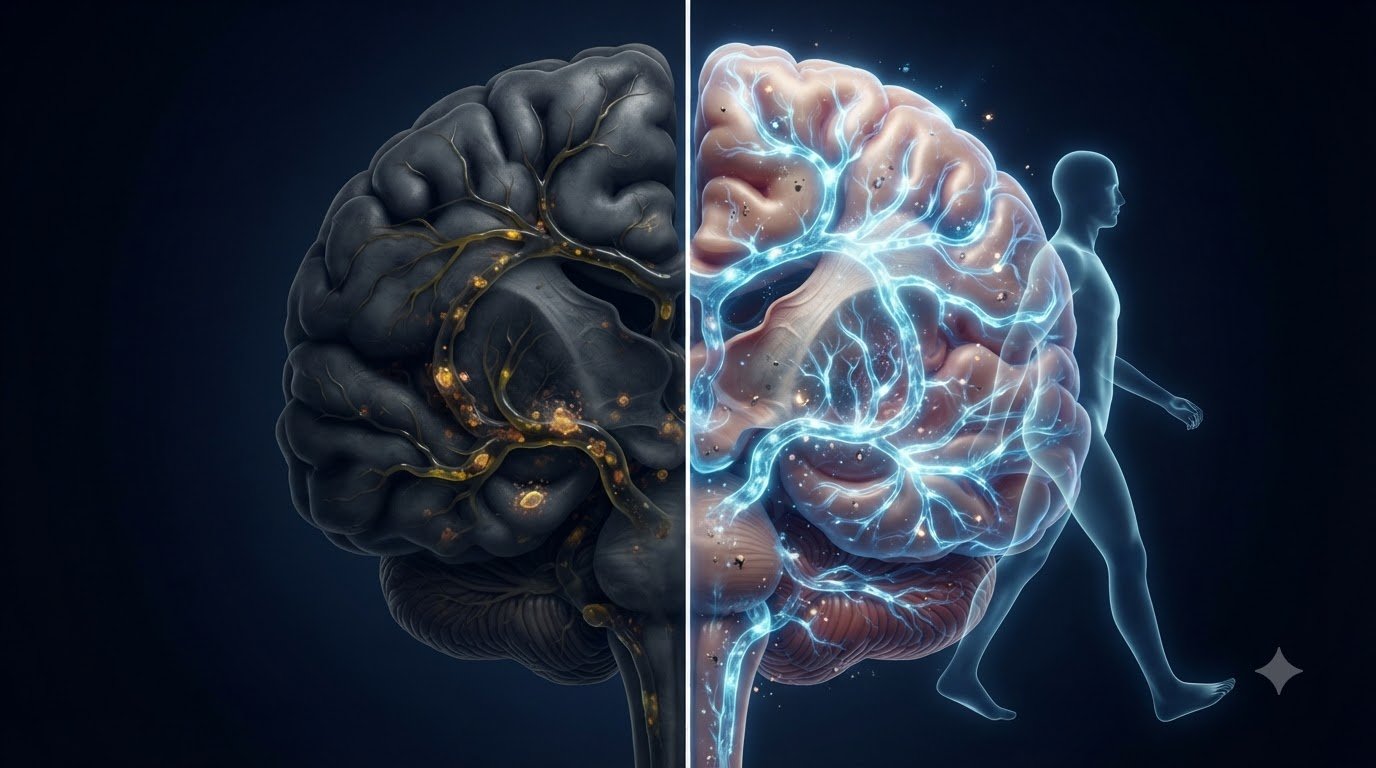
Turns out, it uses a clever workaround. Cerebrospinal fluid seeps into the brain through channels alongside blood vessels. It washes through the tissue, collecting toxic proteins like beta-amyloid and tau. These proteins are strongly linked to Alzheimer’s disease. Then the fluid drains out, carrying that junk away.
This process happens mostly during deep sleep. When you’re in slow-wave sleep, brain cells actually shrink slightly, opening up more space for fluid to flow. It’s like a power wash happening while you rest. You wake up with a cleaner, clearer brain. Or at least, you should.
As we age, this system doesn’t work as well. Sleep often becomes lighter. Blood vessels stiffen. Inflammation creeps up. The channels that carry the cleansing fluid can become narrow and inefficient. Waste starts to accumulate. Over years, that buildup may contribute to memory problems and cognitive decline.
This is where the new research gets exciting. The team at Victoria University, led by Dr. Amy Reichelt, reviewed a wide body of evidence on exercise and brain health. They connected the dots between physical activity and the glymphatic system in a fresh, integrated way. Exercise, they found, hits multiple maintenance switches at once.
First, exercise promotes deeper, higher-quality sleep. You fall asleep faster and spend more time in the restorative stages where glymphatic flow peaks. A simple 30-minute walk can change your sleep architecture that very night. Better sleep means more cleaning cycles, which means less toxic protein buildup over time.
Second, exercise reduces systemic inflammation. Chronic inflammation damages the delicate cells that line blood vessels and glymphatic channels. When inflammation drops, those channels stay flexible and open. The fluid can flow more freely. The brain’s trash trucks can do their rounds without hitting roadblocks.
Third, physical activity keeps blood vessels healthy and elastic. The glymphatic system piggybacks on the vascular network. Pulsations from arteries help push cerebrospinal fluid through brain tissue. Stiff vessels don’t pulse as well. But a well-exercised heart and flexible arteries create the rhythmic push the glymphatic system needs.
So you’re not doing one thing for your brain when you exercise. You’re doing three or four. You’re telling your immune system to calm down. You’re asking your blood vessels to stay springy. And you’re tucking yourself into deeper, more cleansing sleep. All of that feeds directly into waste clearance.
The research also suggests that exercise triggers molecular signals that may directly boost the glymphatic machinery. Certain neurotransmitters and proteins released during physical activity could increase the production of cerebrospinal fluid or enhance the pumping mechanisms. It’s a multi-layered, beautifully orchestrated biological response.
The implications are enormous. We don’t have a pill that effectively clears amyloid from the brain. Drug trials for Alzheimer’s have been heartbreakingly difficult. But here is something accessible, free, and side-effect-free that supports the brain’s own cleaning system. And the evidence keeps piling up.
I spoke with neurologists who treat patients with early memory complaints. They often say the same thing: “Move more. Walk. Dance. Garden. Just don’t sit all day.” They’ve seen the observational studies. But now, the glymphatic angle gives them a concrete mechanism to explain why movement matters. It’s not just about blood flow. It’s about drainage.
There’s something wonderfully practical about this science. You don’t need a gym membership. You don’t need fancy equipment. A brisk walk, a swim, a bike ride — anything that gets your heart rate up and your muscles working — seems to do the job. Consistency matters more than intensity.
And if you’re already active, this is permission to keep going. Every jog, every yoga session, every dance break in the kitchen — you’re not just burning calories. You’re helping your brain take out the trash. Literally. You’re rinsing away the proteins that could one day threaten your memory and personality.
The Victoria University paper also touches on how quickly the benefits might kick in. Animal studies show that even a single bout of exercise increases glymphatic flow. Humans may experience similar short-term boosts. But the real magic is cumulative. Years of regular movement keep the system robust and responsive.
Of course, we need to be careful not to over-promise. Exercise won’t completely erase genetic risk. Some families carry genes that produce more amyloid or less efficient clearance. But research suggests that even in high-risk individuals, physical activity is associated with slower cognitive decline. It’s a powerful modifier.
Think of it like brushing your teeth. Brushing doesn’t guarantee you’ll never get a cavity, but it dramatically shifts the odds. Exercise is a daily hygiene habit for the brain. A little bit, done often, keeps the gunk from settling in and causing trouble. And who wouldn’t want that?
The beauty of this study is that it ties together things we already knew intuitively. A good night’s sleep clears the mind. A walk reduces stress. Staying active keeps you sharp. Now we can see the molecular thread linking all of them. It’s deeply satisfying science.
What if we could boost the glymphatic system even more? Researchers are exploring whether certain sleeping positions help (lying on your side seems better than on your back, in rodents at least). They’re looking at whether hydration, diet, or even specific frequencies of sound during sleep could enhance clearance. But for now, exercise is the clearest lever we have.
The public health message practically writes itself. If you care about your brain as you age, move your body. Not for a beach body. Not for a marathon medal. But for a cleaner, clearer, healthier brain that holds onto its memories longer. That’s a compelling reason to lace up.
I think about my own parents and grandparents. What if a daily walk in their 50s and 60s could have shaved off some of the cognitive decline they faced later? We can’t rewind, but we can write a different story for ourselves and our kids. We can build movement into the fabric of daily life.
You don’t need to overhaul everything. Start where you are. Add a 15-minute walk after dinner. Take the stairs. Park a little further away. The brain doesn’t demand extremes. It just wants circulation, deep sleep, and low inflammation. And movement, gentle and consistent, delivers all three.
Victoria University’s findings remind us that the brain is not a static organ. It’s dynamic, fluid, and constantly cleaning house. We can choose to help it. We can choose to sweep the floors, clear the drains, and take out the trash. All it takes is moving our bodies enough to keep the janitors working.
So tonight, when you drift off to sleep, know this: your brain’s tiny cleaning crew is clocking in. And what you did during the day — how much you moved, how you elevated your heart rate — might just determine how thorough a job they do. That’s a beautifully empowering thought.
It’s never too late to start. Even people in their 70s and 80s show cognitive benefits from beginning an exercise routine. The glymphatic system responds at every age. So whether you’re 35 or 75, today’s walk is an investment in tomorrow’s clarity. And there’s something quietly wonderful about that.
Research Source:
Reichelt, A.C. et al. (2026). Physical Exercise Supports Glymphatic Clearance in the Aging Brain: Mechanisms and Therapeutic Potential. Neurobiology of Aging.
DOI: 10.1016/j.neurobiolaging.2026.08.001
Victoria University.