








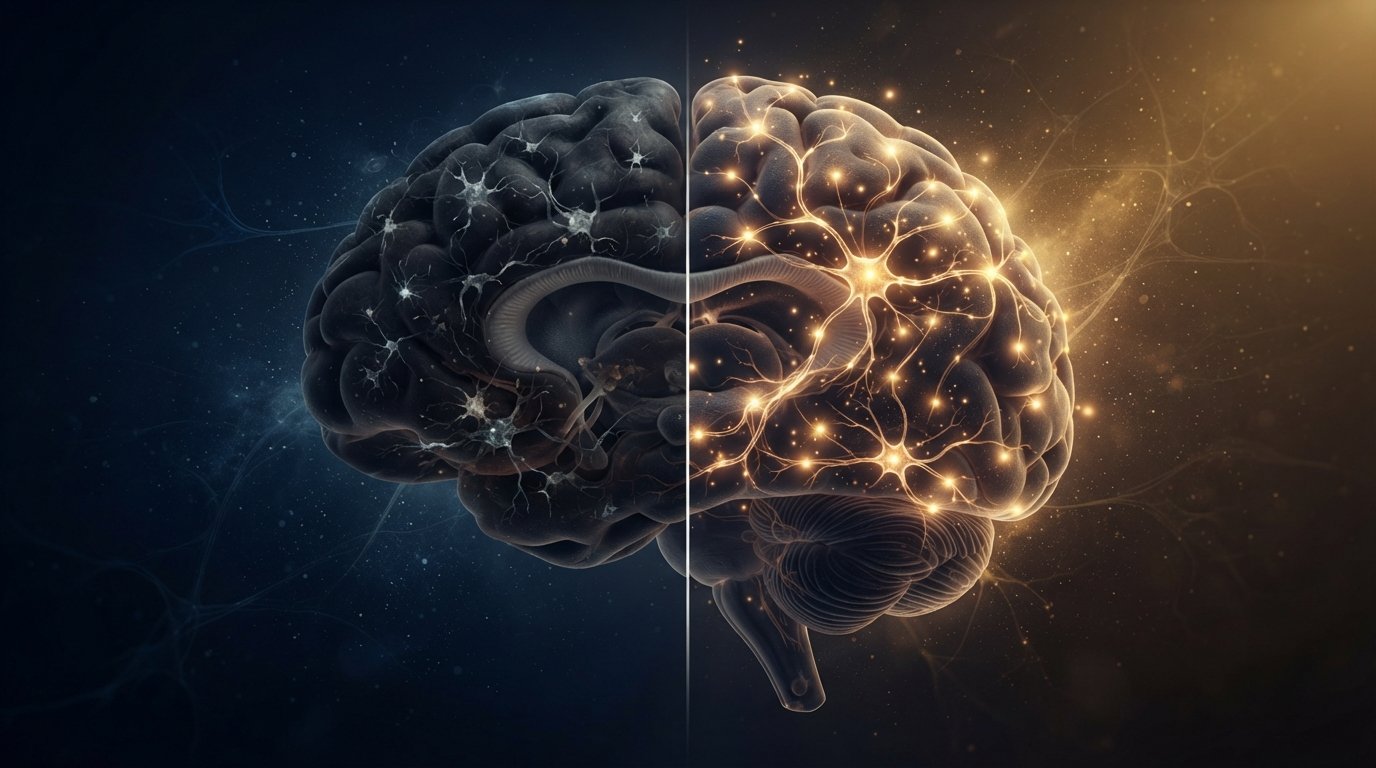
Some people carry all the biological hallmarks of Alzheimer’s disease in their brains — the plaques, the pathology researchers associate with memory loss — and yet they never develop dementia. Their minds stay sharp. Their memories stay intact.
This has puzzled Alzheimer’s researchers for years. A new study from the Netherlands Institute for Neuroscience offers one of the most compelling clues yet as to why.
The Mystery Of Cognitive Resilience
“Around 30 percent of older adults who develop Alzheimer’s disease never experience its symptoms,” explains senior author Dr. Evgenia Salta. “We really don’t know why. That’s a big mystery, and a very important one.”
No Surgery, No Daily Pills — Just One Shot That Regenerated An Arthritic Joint In Under Two Months
This phenomenon is called cognitive resilience — the brain’s ability to keep functioning well despite underlying disease. Understanding it matters enormously, because if scientists can figure out what protects these resilient brains, that knowledge could point toward entirely new ways to treat or prevent dementia.
Could The Brain Repair Itself?
One theory researchers wanted to test was whether resilient brains are simply better at generating new brain cells to replace ones lost to disease — a process called adult neurogenesis.
“Perhaps they can add new brain cells to a network that is degenerating,” Salta suggests.
Adult neurogenesis is well documented in many animal species. But whether — and how much — this happens in human brains has been debated by scientists for years.
To investigate, Salta and her team examined donated brain tissue from the Netherlands Brain Bank. They studied three groups: healthy individuals, people who had Alzheimer’s disease with dementia, and a particularly interesting third group — people whose brains showed Alzheimer’s pathology but who never developed dementia symptoms during their lifetime.
The researchers focused on a small region within the brain’s memory center — the hippocampus — one of the few places where new neurons may still form in adulthood.
“These cells are extremely rare, so we had to develop new ways to find them,” Salta says. “We really zoomed in on the exact spot where we expected them to be.”
Rare Immature Neurons Persist Into Very Old Age
The team identified what they were looking for: immature neurons — cells that resemble young, not-yet-fully-developed brain cells.
“Even at an average age of over 80, we still found these immature neurons in all groups,” Salta reports.
This alone was a meaningful finding — confirming that these unusual cells persist in the human brain well into advanced age, across healthy people, people with Alzheimer’s, and resilient individuals alike.
The Surprising Twist: It’s Not About Cell Numbers
Here’s where the study takes an unexpected turn.
The researchers assumed resilient individuals might simply have more of these immature neurons — a larger reserve to draw on. That’s not what they found.
“What surprised the researchers, however, was that resilient individuals did not have dramatically larger numbers of immature neurons than people with Alzheimer’s disease,” the study notes.
Instead, the most important difference appeared to be how the cells behaved.
“In resilient individuals, these cells seem to activate programs that help them survive and cope with damage,” Salta explains. “We also see lower signals related to inflammation and cell death.”
More Than Replacement — A Support System?
This finding led the research team to a genuinely new hypothesis about what these cells might actually be doing.
“It might not be only about replacing lost neurons,” Salta explains. “It could be that these cells support the surrounding tissue and help the brain stay functional and ‘youthful.’ They may act as a sort of fertilizer in a garden that has started falling apart.”
This is a meaningful shift in thinking. Rather than picturing new neurons as simple replacement parts for a damaged network, this idea suggests they might play an active, ongoing supportive role — helping maintain the health of the tissue around them, even as disease progresses elsewhere in the brain.
Important Limitations To Understand
Salta is careful to emphasize how much remains uncertain.
“We assume the cells’ function based on the data, but we cannot confirm it in this type of study,” she explains. Because the research examined donated brain tissue rather than living brains, the team could not directly observe how these cells function during a person’s life.
She also cautions against expecting a single, simple explanation for Alzheimer’s resilience.
“This is one piece of a very large puzzle,” she says. “There will never be just one factor that explains resilience.”
A Broader Shift In Alzheimer’s Research
This study reflects something larger happening in the field. For decades, Alzheimer’s research focused primarily on understanding how the disease damages the brain. Increasingly, scientists are asking a different question: why can some brains withstand that damage?
“Somewhere along this trajectory, there’s a kind of decision point,” Salta explains. “Some people remain stable, others develop dementia. We want to understand what drives that difference.”
Future research from this team will explore how immature neurons communicate with other brain cells, and whether those interactions genuinely help preserve memory and cognitive function over time.
“Cognitive resilience is extremely exciting,” Salta says. “If we understand what protects these brains, it could eventually lead to new therapeutic strategies.”
What This Means For You Right Now
It’s important to be clear: this research does not translate into a treatment or lifestyle recommendation today. It was conducted using donated brain tissue, and the researchers themselves are cautious about drawing firm conclusions about cell function.
That said, this research adds to a broader and encouraging body of evidence about brain resilience in general. Several evidence-based factors are consistently associated with better cognitive aging outcomes, according to organizations including the Alzheimer’s Association and NIH:
- Regular physical activity — supports cardiovascular health, which is closely tied to brain health
- Cognitive engagement — staying mentally active through learning, reading, and social interaction
- Quality sleep — supports the brain’s natural waste-clearance processes
- Managing cardiovascular risk factors — blood pressure, cholesterol, and blood sugar all affect brain health
- Social connection — strongly linked to reduced dementia risk in longitudinal studies
None of these guarantee resilience against Alzheimer’s. But they represent the best current evidence-based steps available while research like this continues to uncover the deeper biological mechanisms involved.
Key Takeaways
- About 30% of people with Alzheimer’s brain pathology never develop dementia symptoms — a phenomenon called cognitive resilience
- Researchers studying donated human brain tissue found rare immature neurons persist in the hippocampus even past age 80
- Resilient brains did not have more of these cells — they had cells that behaved differently, activating survival programs and reducing inflammation
- These cells may support surrounding brain tissue rather than simply replacing lost neurons
- This is early-stage tissue research; the findings are hypotheses, not confirmed mechanisms or treatments
- Future research will explore how these cells communicate with the rest of the brain
When To See A Healthcare Professional
If you or a loved one are experiencing memory changes, confusion, or difficulty with daily tasks, speak with a doctor. Early evaluation is important, especially if you notice:
- Increasing forgetfulness that affects daily life
- Difficulty following conversations or finding words
- Getting lost in familiar places
- Changes in mood, personality, or judgment
A physician can assess these symptoms and refer you to a neurologist or memory specialist if needed.
⚠️ Medical Disclaimer: This article is for informational purposes only and is based on research conducted using donated human brain tissue. It does not constitute medical advice or represent an available treatment. Always consult a qualified healthcare professional regarding memory concerns or cognitive health.
Do you know someone whose sharp memory into old age has always amazed you? We’d love to hear their story in the comments.
Source: Netherlands Institute for Neuroscience – KNAW — July 3, 2026
Journal Reference: Giorgia Tosoni, Dilara Ayyildiz, Sarah Snoeck, et al. Transcriptional profiles of immature neurons in aged human hippocampus track Alzheimer’s pathology and cognitive resilience. Cell Stem Cell, 2026; 33 (5): 763.
DOI: 10.1016/j.stem.2026.04.002