








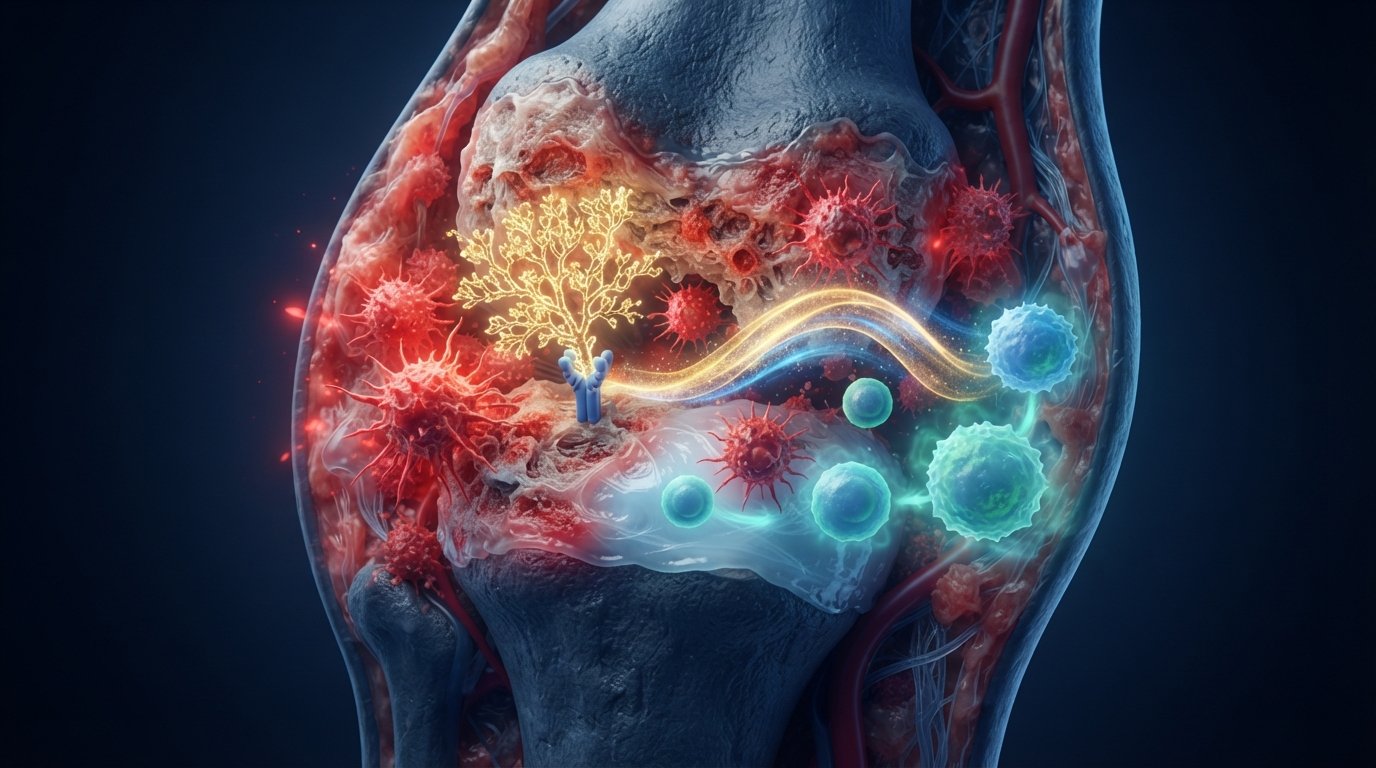
Rheumatoid arthritis (RA) is a chronic, often relentless autoimmune disease affecting roughly 1% of people worldwide. It occurs when the immune system mistakenly attacks healthy joint tissue, driving pain, swelling, stiffness, and progressive joint damage that can significantly limit mobility and quality of life over time.
Existing treatments — including disease-modifying drugs and biologics — have transformed RA management, but they don’t work equally well for everyone, and some carry serious side effect risks with long-term use. A new study published in the journal Engineering introduces a genuinely promising candidate that could eventually expand treatment options: a plant-derived compound called obakulactone (OL).
What Is Obakulactone?
Obakulactone is a tetracyclic triterpenoid — a type of naturally occurring plant compound — isolated from Phellodendri cortex, the bark of the Phellodendron tree. This bark has a long history of use in traditional medicine, and modern researchers are increasingly investigating whether its bioactive compounds hold genuine therapeutic value that can be scientifically validated and mechanistically understood.
This study represents exactly that kind of validation effort — moving beyond traditional use toward a detailed, molecular-level understanding of how obakulactone might actually work against rheumatoid arthritis.
Exercise Doesn’t Just Strengthen The Heart. It Rewires It
Testing Obakulactone In An Arthritis Model
Researchers tested obakulactone in rats with rheumatoid arthritis induced using complete Freund’s adjuvant (CFA) — a well-established method for creating a reliable, standardized arthritis model in laboratory animals.
The rats received one of three daily doses — low, medium, or high — for 21 consecutive days. Researchers then assessed a comprehensive range of physical, immunological, and molecular outcomes.
The Physical Results: Less Swelling, Restored Joint Structure
The treatment produced clear, measurable improvements in joint health.
Obakulactone significantly reduced swelling in the affected joints. It also helped restore the normal structure of both cartilage and the synovium — the specialized tissue lining the inside of joints that becomes chronically inflamed and thickened in rheumatoid arthritis.
The treatment additionally improved abnormal changes in immune organs, specifically the thymus and spleen — both of which are frequently disrupted in autoimmune disease states.
Rebalancing The Immune System
Perhaps the most clinically significant finding involved how obakulactone reshaped immune cell behavior directly within the joints — the core mechanism driving RA’s ongoing tissue destruction.
The compound reduced elevated levels of two key immune cell types associated with RA-driven inflammation:
- CD3+ T cells — a broad category of immune cells central to driving the autoimmune attack
- CD68+ macrophages — immune cells that, when overactive, sustain chronic joint inflammation
Even more notable was how obakulactone changed macrophage behavior. Macrophages can exist in different functional states: a proinflammatory M1 state (marked by the protein CD86) that drives tissue damage, or an anti-inflammatory, tissue-repairing M2 state (marked by CD206) that supports healing.
Obakulactone shifted macrophages away from the destructive M1 state and toward the reparative M2 state — essentially redirecting the immune system’s behavior from attack mode toward repair mode, a pattern with genuine therapeutic significance across many inflammatory conditions.
The compound also limited the development of Th17 cells — a specific type of immune cell derived from CD4+ T cells that plays a particularly important role in driving RA-related tissue inflammation and damage.
Reduced Inflammatory Markers In The Blood
Blood testing confirmed these cellular-level changes translated into measurable systemic effects. Obakulactone lowered several key inflammatory molecules in a clear dose-dependent manner, meaning higher doses produced stronger effects:
- IL-1β, IL-6, IL-17, and TNF-α — core inflammatory cytokines involved in driving RA symptoms and joint damage
The treatment also reduced established rheumatoid arthritis clinical markers, including rheumatoid factor (RF), anti-CCP antibodies (CCP-Ab), C-reactive protein (CRP), and matrix metalloproteinase-3 (MMP-3) — all of which are used clinically to help diagnose and monitor RA severity in human patients.
Correcting Disrupted Fat Metabolism
Using advanced multiomics techniques — including metabolomics, MALDI mass spectrometry imaging, and proteomics — researchers discovered that rheumatoid arthritis had significantly disrupted the production and metabolism of several unsaturated fatty acids throughout the body.
Obakulactone helped correct these abnormalities, specifically involving arachidonic acid, linoleic acid, and α-linolenic acid — fatty acids with well-documented roles in regulating inflammation throughout the body.
This finding is significant because it suggests obakulactone’s benefits extend beyond simply calming immune cells directly — it also appears to be correcting a broader metabolic imbalance that contributes to the disease process.
Targeting The Cells That Drive Joint Destruction
The research team also studied obakulactone’s effects on rheumatoid arthritis synovial fibroblasts (SFs) — specialized cells that, in RA, can grow abnormally and aggressively, contributing directly to joint tissue thickening, inflammation, and destruction of cartilage and bone.
Obakulactone slowed the abnormal growth of these fibroblasts, encouraged them to undergo apoptosis (a form of controlled cell death that eliminates damaged or dysfunctional cells), and reduced their release of inflammatory cytokines — directly targeting one of the key cellular drivers of ongoing joint damage in RA.
The Molecular Mechanism: ACOT1 As A New Drug Target
The most scientifically significant finding in this research involves the identification of a specific molecular target.
Using rigorous binding assays — including cellular thermal shift assays, microscale thermophoresis, and surface plasmon resonance — researchers confirmed that obakulactone binds directly to a protein called ACOT1 (acyl coenzyme A thioesterase 1), with consistent, precisely measured binding affinity across multiple independent testing methods.
Once bound, obakulactone increased the degradation of ACOT1 through the ubiquitin-proteasome pathway — a cellular process in which unwanted proteins are tagged and sent to the proteasome, the cell’s protein-recycling machinery, for breakdown.
Reducing ACOT1 levels had a cascading effect: it lowered a downstream protein called stearoyl-CoA desaturase-1 (SCD1), which in turn limited activation of two major inflammatory signaling pathways — JAK-STAT and PI3K-AKT. Both pathways play central roles in regulating cell survival, growth, inflammation, and tissue fibrosis, and both are frequently overactive in rheumatoid arthritis.
By suppressing this signaling cascade, obakulactone reduced inflammatory and fibrotic changes specifically within the synovial fibroblasts driving joint destruction.
Additional rescue experiments and inhibitor studies supported this proposed mechanism, confirming that obakulactone’s anti-inflammatory, antiproliferative, and cell-death-promoting effects appear to genuinely operate through targeting ACOT1, correcting arachidonic acid metabolism, and modulating JAK-STAT/PI3K-AKT signaling.
Why This Discovery Matters
This research offers two distinct but related contributions to rheumatoid arthritis science.
First, it provides preclinical evidence that obakulactone itself could become a candidate therapeutic compound for RA treatment, pending further safety and efficacy research.
Second — and arguably more significant for the broader field — it identifies ACOT1 and unsaturated fatty acid metabolism as promising new targets for future drug development, independent of whether obakulactone specifically advances to human trials. This kind of mechanistic discovery often opens doors for entirely new classes of drugs designed to target the same biological pathway more precisely.
Important Limitations
It’s essential to understand exactly where this research currently stands. The study was conducted entirely in rats and isolated cells — not in human patients. While the mechanistic findings are detailed and rigorously tested, significant further research is needed to determine whether obakulactone is safe and effective in humans, including appropriate dosing, long-term safety profiles, and controlled human clinical trials.
Key Takeaways
- Obakulactone, a compound from Phellodendron bark, reduced joint swelling, inflammation, and cartilage damage in a rat model of rheumatoid arthritis
- The compound rebalanced immune activity, shifting macrophages from a destructive inflammatory state toward a reparative state
- Obakulactone corrected disrupted unsaturated fatty acid metabolism, including arachidonic acid pathways central to inflammation
- Researchers identified the protein ACOT1 as obakulactone’s direct molecular target, opening a new avenue for future drug development
- This is early-stage animal and cell research; human safety and efficacy studies are still needed before any clinical application
When To See A Healthcare Professional
If you are experiencing joint pain, swelling, or stiffness that persists, or have been diagnosed with rheumatoid arthritis, consult a rheumatologist for evidence-based treatment options. Do not use unregulated supplements or compounds as a substitute for prescribed RA treatment without first discussing this with your doctor.
⚠️ Medical Disclaimer: This article is for informational purposes only and is based on animal and laboratory cell research. It does not constitute medical advice and does not represent an approved human treatment. Always consult a qualified healthcare professional regarding rheumatoid arthritis or any medical condition.
Source: Higher Education Press / Engineering — July 22, 2026
Journal Reference: Hongda Liu, Le Yang, Yu Yang, et al. Obakulactone Alleviates Rheumatoid Arthritis by Promotion of ACOT1 Degradation via the Ubiquitin‒Proteasome Pathway and Restoration of Unsaturated Fatty Acid Homeostasis. Engineering, 2026; 56: 341.
DOI: 10.1016/j.eng.2025.10.029