







For decades, the advice has been simple. Eat five portions of fruit and vegetables a day. Cover your plate in color. Get your vitamins. Your heart will be fine.
A new study involving more than 30,000 people just revealed that this advice — while not wrong — may be dangerously incomplete.
The Missing Piece In Standard Dietary Guidance
Researchers from the University of Reading, Harvard Medical School, the University of California Davis, and Mars, Inc. published new findings in the journal Food and Function that shift the conversation around heart-healthy eating in a significant way.
Their study analyzed both dietary data and biomarker measurements from over 30,000 participants in the UK and the United States. Rather than relying solely on food questionnaires — which are known to be imprecise — they measured objective biomarkers that provide a more accurate picture of what people are actually absorbing from their diets.
What they were looking for specifically was flavanol intake. Flavanols are naturally occurring plant compounds found in certain fruits, vegetables, and plant-based drinks. They’ve been linked in multiple studies to meaningfully lower risk of cardiovascular disease and death from heart disease.
The results were striking. Fewer than one in five participants consumed enough flavanols to reach the levels previously associated with significant cardiovascular benefits — and this gap persisted even among many participants who were regularly meeting standard fruit and vegetable intake recommendations.
In other words, hitting your five-a-day target is not the same as protecting your heart — not if those five servings are low in flavanols.
Why 500mg Is The Number That Matters
The research builds on earlier findings from the COSMOS study, the largest clinical trial of flavanols ever conducted. That trial established that consuming around 500mg of flavanols per day significantly lowered the risk of death from cardiovascular disease.
The new study’s central finding is that most people — across two large, health-conscious populations — are not getting anywhere near that amount through their normal diets, regardless of whether they follow standard healthy eating guidance.
“Flavanols can significantly reduce the risk of dying from cardiovascular disease, but only if you consume enough of them,” said lead author Dr Javier Ottaviani. “Most people assume that eating plenty of fruit and vegetables covers this, but what this research shows is that the specific choices you make matter far more than the total amount.”
The Highest Flavanol Foods
The practical value of this research lies in what it tells us about which foods actually deliver meaningful flavanol levels. The differences between foods are substantial — far greater than most people realize.
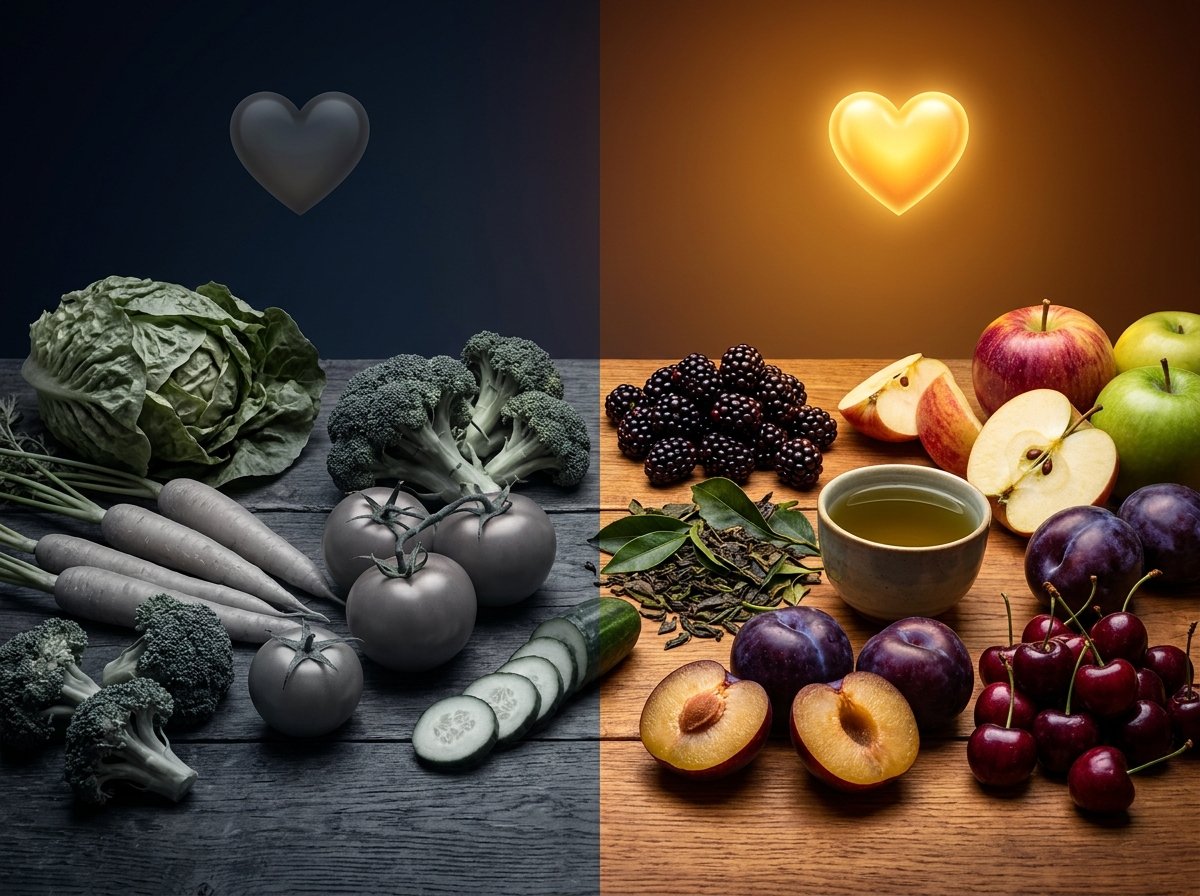
A single punnet of plums (around 500g) contains approximately 450mg of flavanols — almost a full day’s target in one serving. A punnet of cranberries (250g) provides roughly 300mg. A punnet of blackberries (200g) delivers around 250mg.
A single cup of green tea contributes approximately 200mg — making it one of the most efficient flavanol sources per serving of any common drink. A small handful of broad beans (80g) provides around 140mg. A punnet of cherries (400g) gives roughly 130mg.
One medium apple eaten with its skin (200g) contributes approximately 110mg — making the skin itself an important part of the equation, since flavanols concentrate there. A punnet of strawberries provides around 90mg. A punnet of blueberries contributes roughly 80mg. Two tablespoons of dry pinto beans add approximately 70mg.
By contrast, many common fruits and vegetables that people rely on for their daily servings — including many salad vegetables, root vegetables, and tropical fruits — contain very low flavanol levels and contribute minimally to this specific cardiovascular benefit.
What This Means For How We Think About Healthy Eating
The implications for dietary guidance are significant. Current recommendations focus on quantity — how many servings of fruit and vegetables people eat. This research suggests that quality and specificity need to become part of the conversation too.
“Five-a-day is the right message, but we may need to think more carefully about which five,” said Professor Gunter Kuhnle of the University of Reading. “Different fruits and vegetables offer very different nutritional benefits beyond vitamins and minerals, and as our understanding of these compounds grows, there is a real opportunity to make dietary guidance more specific and more effective.”
The good news is that the practical steps here are genuinely achievable. You don’t need supplements or dramatic dietary overhauls. Adding a handful of blackberries to your morning yogurt, choosing an apple with skin as a daily snack, swapping one cup of coffee for green tea, and incorporating cherries or plums regularly can meaningfully increase your flavanol intake without requiring major lifestyle changes.
The research doesn’t suggest abandoning general healthy eating principles. Variety, balance, and meeting overall fruit and vegetable targets remain important. But within that framework, being more intentional about which specific foods you include — and leaning toward the highest-flavanol options — may make a genuine difference to long-term cardiovascular health.
Your heart doesn’t just need more fruit. It needs the right fruit.
Source: University of Reading / Harvard Medical School / Food and Function — June 2026
Journal Reference: Javier I. Ottaviani, John W. Erdman, Francene M. Steinberg, JoAnn E. Manson, Howard D. Sesso, Hagen Schroeter, Gunter G. C. Kuhnle. Adhering to dietary guidelines does not yield flavanol intake levels associated with beneficial cardiovascular effects. Food & Function, 2026.
DOI: 10.1039/D6FO00867D