








Some families seem to have cracked a code the rest of us are still searching for. Their members stay sharper, stronger, and freer from serious disease well into old age — while peers of the same generation are already managing heart conditions, cognitive decline, and other chronic illnesses. For decades, scientists have wondered whether this pattern was truly genetic or simply the result of shared lifestyle, wealth, and luck.
New research presented at the European Society of Human Genetics annual conference in Gothenburg suggests the answer, at least in part, is written into the DNA itself — in a rare mutation that quietly keeps inflammation in check throughout life.
Why Family Studies Are Different
Most genetic longevity research focuses on individuals who happen to live exceptionally long lives. This new approach, led by PhD researcher Pasquale Putter from Professor Eline Slagboom’s group at Leiden University Medical Center, takes a different angle: studying entire multigenerational families where exceptional health and longevity appear consistently across generations.
The advantage of this family-based approach is significant. Longevity is influenced by far more than genetics alone — socioeconomic status, diet, behavior, stress levels, and environmental factors all contribute meaningfully. By studying families rather than isolated individuals, researchers can better separate what’s truly genetic from what’s simply coincidental overlap in lifestyle.
Researchers Discovered That Twisting A Material Like Cheese Slices Could Unlock Quantum Computing
Previous research from the same group had already established something striking. Middle-aged individuals with long-lived parents developed cardiometabolic diseases — conditions affecting the heart, blood vessels, and metabolism — an average of 13 years later than their partners whose parents had shorter lifespans.
Thirteen years. Not a modest statistical signal. A clinically meaningful, life-defining difference in when disease arrives.
“This made it clear that their longer healthspan was passed down to subsequent generations,” Putter said.
Narrowing 20,000 Genes To 12 Candidates
To identify which genetic variants might be driving this advantage, the researchers analyzed genomes from 212 groups of long-lived siblings participating in the Leiden Longevity Study — brothers and sisters from the same parents, all showing the family pattern of extended healthy aging.
The initial analysis identified four genomic regions likely to contain relevant longevity genes — narrowing the search from roughly 20,000 genes across the human genome to just 350. Further analysis then pinpointed 12 rare protein-altering genetic variants that appeared most promising as contributors to longer, healthier lives.
The CGAS Mutation: A Biological Dial On Inflammation
Among those 12 candidates, one variant stood out — a mutation in the CGAS gene, which appeared in two long-lived families included in the study.
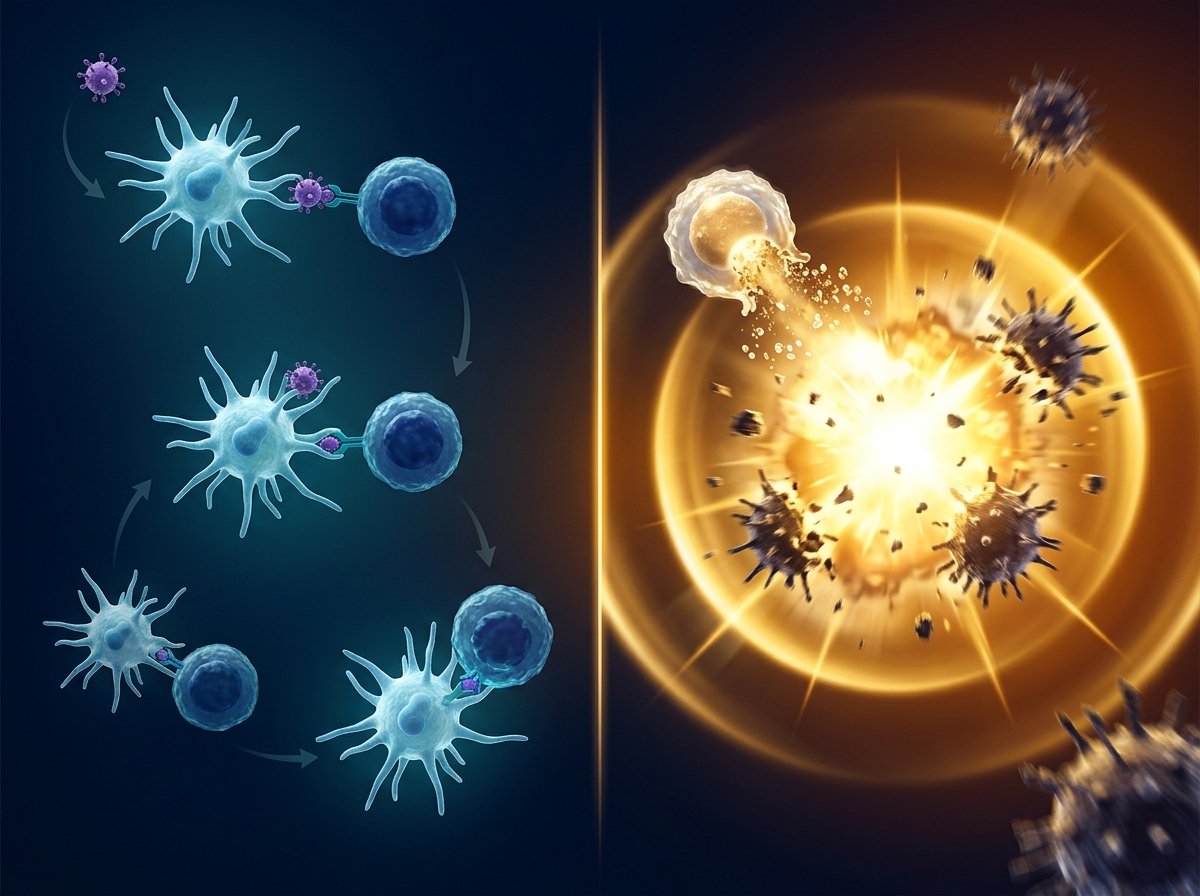
CGAS stands for cyclic GMP-AMP synthase. Its normal job is to detect when DNA appears in places inside cells where it shouldn’t be — a signal that something is wrong, either due to viral infection or cellular damage. When CGAS detects this misplaced DNA, it triggers an inflammatory immune response to deal with the threat.
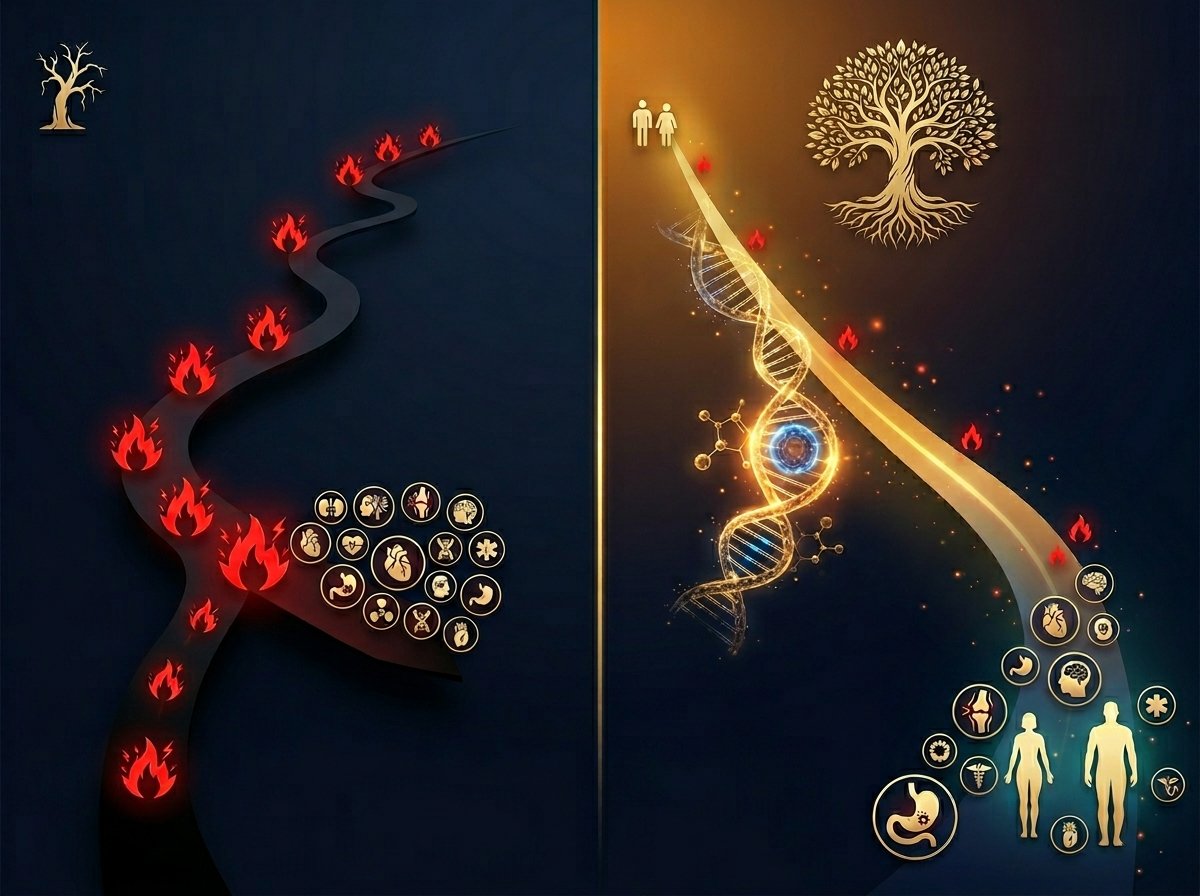
Inflammation is, in short bursts, an essential and life-saving process. But chronic, low-level inflammation — the kind that persists quietly in tissues over years and decades — is one of the most well-established drivers of age-related disease, implicated in cardiovascular disease, neurodegeneration, metabolic disorders, and cancer.
The CGAS mutation identified in these long-lived families appears to produce a subtly reduced version of this inflammatory response. The researchers believe these family members likely carry only one active copy of the CGAS gene rather than the usual two, resulting in a lower-level inflammatory signal throughout their lives.
Critically, the reduction appears calibrated rather than complete. These individuals aren’t immunocompromised — their bodies can still clear infections and repair cellular damage. The dial is turned down, not switched off. And that subtle difference in the inflammatory baseline across an entire lifetime may be enough to delay the onset of chronic disease by more than a decade.
“It is likely that members of these families had only one active copy of the CGAS gene, rather than two, and that this will have reduced the inflammatory response in their bodies, while still being sufficient to clear infections and repair damage, thereby contributing to the protective mechanisms that enable extended healthspan and survival,” Putter explained.
“We have been surprised by the magnitude of the effect of the CGAS mutation in the in vitro experiments we have carried out to date.”
Why Balance Is Everything
The researchers are careful to note that CGAS cannot simply be switched off in everyone as a longevity strategy. The context matters enormously.
Completely shutting down the CGAS pathway — rather than simply reducing it — could make a person significantly more vulnerable to viral infections and potentially increase cancer risk, since CGAS also plays a surveillance role in detecting abnormal cellular behavior. On the other hand, excessive activation of CGAS drives the kind of chronic inflammation that accelerates aging and disease.
The mutation found in these long-lived families appears to occupy a sweet spot — enough CGAS activity to maintain protection, not so much that chronic inflammation takes hold. Finding and targeting that balance pharmacologically or through gene-based approaches will be one of the central challenges if this pathway is ever to become the basis for a therapeutic intervention.
Testing In Killifish
To move from laboratory cell studies to understanding how this mutation behaves in a living organism, the research team is planning to introduce the CGAS variant into killifish — the shortest-lived vertebrates, with a natural lifespan of just three to nine months. Their brief lifespan makes them ideal for aging research, allowing researchers to observe lifetime effects within a timeframe practical for a research program.
The killifish experiments, to be conducted at the Max Planck Institute for the Biology of Ageing in Cologne, Germany, will test whether the mutation genuinely extends lifespan and what effects it produces in different tissues throughout life — providing the kind of whole-organism evidence that cell studies alone cannot deliver.
The Bigger Picture
Professor Alexandre Reymond, chair of the conference, captured the significance of this research direction clearly.
“These findings allow our community to zoom in on factors tied to longevity and, more importantly, they point to what maybe are key elements to extend the healthspan of all.”
That last phrase matters. The goal of longevity research is shifting — away from simply adding years to life, and toward adding healthy, disease-free years to life. The families in this study aren’t just living longer. They’re living better for longer. And somewhere in their DNA, researchers may have just found a genetic explanation for why. 🧬✨
Source: European Society of Human Genetics Annual Conference, Gothenburg / Leiden University Medical Center — June 21, 2026
Note: This research was presented as a conference abstract. Lead researcher: Pasquale Putter, PhD student, Prof. Eline Slagboom’s group, Leiden University Medical Center, The Netherlands.