







Here’s something that should stop you mid-scroll.
Scientists just analyzed blood markers from over 164,000 people across the United Kingdom and the United States. What they found wasn’t just surprising — it was alarming enough to be published in Nature Medicine, one of the most respected medical journals on the planet.
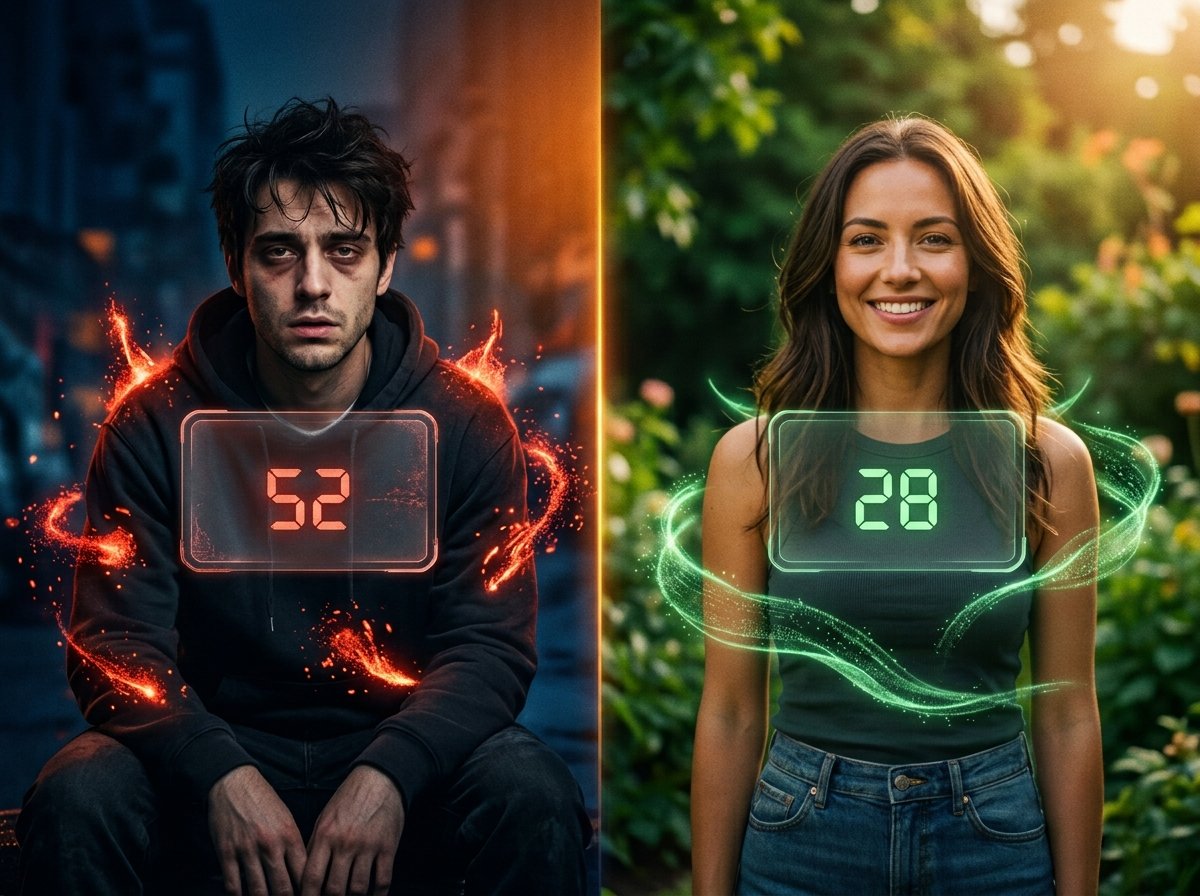
Younger generations are biologically older than previous generations were at the same age. And that accelerated biological aging appears to be directly linked to rising rates of cancer in young adults.
This isn’t a story about lifestyle choices or individual bad luck. It’s a story about something happening at the population level — embedded in the biology of an entire generation.
The Tiny Creature That Digests Your Food Before You Even Get a Chance To
What Is Biological Aging And Why Does It Matter?
Before getting into the findings, it’s worth understanding exactly what researchers mean by biological aging — because it’s not the same as your actual age in years.
Biological age measures how old your body appears to be based on objective markers in your blood. These include:
- CRP — a key marker of chronic inflammation
- Glucose — linked to metabolic health and diabetes risk
- Creatinine — reflecting kidney function
- Albumin — a protein tied to nutritional status and organ health
- White blood cell counts — indicators of immune system activity
The researchers used a validated metric called PhenoAge, which combines chronological age with these nine blood biomarkers to calculate a biological age score. From that, they derived an “age gap” — the difference between how old you actually are and how old your biology suggests you are.
A positive age gap means your body is biologically older than expected. A negative gap means you’re aging more slowly than average.
The Generational Gap That Stunned Researchers
The study was led by molecular epidemiologist Yin Cao of Washington University School of Medicine in St. Louis. The team examined data from two major cohorts:
- 154,169 adults in the UK Biobank, comparing those born in the early 1950s with those born in the late 1960s and early 1970s
- 10,262 adults in the US All of Us research program, comparing those born in the 1960s with those born in the 1990s
The contrast between generations was striking.
In the UK data, people born between 1965 and 1974 had a 23% higher standardized biological age gap than those born between 1950 and 1954 — measured at the same chronological age.
In the US data, the gap was even more pronounced. Those born between 1990 and 1999 showed a 92% higher standardized age gap than those born between 1965 and 1969.
Read that again. A 92% higher biological age gap. Not over decades of additional life — at the same chronological age, compared side by side.
Younger people, by virtually every blood-based biological aging measure, are looking older than their parents did at the same point in their lives.
The Direct Link To Early-Onset Cancer
This finding alone would be scientifically significant. What makes it genuinely alarming is what came next.
The researchers then examined whether these biological age gap scores were associated with cancer risk before age 55 — what clinicians call early-onset cancer.
They were. Significantly.
- For every standard-deviation increase in age gap score, the risk of early-onset solid cancers rose by 8%
- The strongest single association was for lung cancer, where risk rose by 57%
- Colorectal cancer and uterine cancer also showed strong associations with higher biological age scores
Critically, these associations held up even after researchers controlled for:
- Smoking history
- Obesity
- Telomere length (a separate measure of cellular aging)
- Genetic cancer predisposition
In other words, the biological aging signal was predicting cancer risk independently of the factors we already know about. It was adding information beyond what traditional risk factors capture.
The researchers also found that different types of biological aging had different cancer associations:
- Immune system aging (measured through protein analysis) was more strongly linked to early-onset lung cancer
- Fat tissue aging was more strongly associated with early-onset colorectal cancer risk
This level of biological specificity suggests that different aspects of accelerated aging may be driving cancer risk through distinct biological pathways — and that identifying those pathways could eventually enable truly personalized prevention strategies.
Why Are Younger Generations Aging Faster?
This is the question the study raises but doesn’t fully answer — and researchers are honest about that.
“Right now, we don’t have a definitive answer to what’s driving the rise of early-onset cancers around the world,” said David Scott, Director of Cancer Grand Challenges. “But studies like this are helping us piece together the bigger picture, showing that cancer may be influenced not just by changes inside individual cells, but by wider changes happening across the body as a whole.”
The likely contributors are multiple and intersecting:
- Chronic low-grade inflammation driven by ultra-processed diets, gut microbiome disruption, and metabolic stress
- Environmental chemical exposure — plasticizers, air pollution, and other compounds with documented effects on cellular aging
- Metabolic dysfunction — rising rates of insulin resistance and metabolic syndrome even in young adults
- Chronic psychological stress — with measurable biological consequences on immune and inflammatory markers
- Sleep disruption — consistently linked to accelerated biological aging in research
No single cause fully explains the generational shift. But the signal in the blood data is clear: something in the modern environment is accelerating the biological clock of younger generations in ways that weren’t happening at the same rate in previous ones.
What This Means For Prevention
The most important takeaway from this research isn’t about fear — it’s about opportunity.
“If we can identify younger people with the highest cancer risk when they are still healthy, we can focus on prevention and early-detection strategies for the individuals who will benefit most,” said Cao.
Biological age scores based on simple blood tests could potentially become a tool for:
- Identifying high-risk individuals early — before symptoms appear
- Personalizing cancer screening — focusing resources on those whose biology suggests elevated risk
- Tracking the effectiveness of lifestyle interventions — monitoring whether changes in diet, exercise, or stress actually shift biological age in meaningful ways
“Our ultimate goal is to decode how modern environments become biologically embedded to drive cancer risk,” Cao said, “transforming prevention from broad recommendations to personalized interventions.”
The Bottom Line
Younger generations aging faster is not a metaphor about stress or burnout. It’s a measurable biological phenomenon showing up in blood samples across hundreds of thousands of people on two continents.
And it appears to be contributing — directly and independently — to the alarming rise in early-onset cancer that clinicians have been watching with growing concern for the past decade.
The good news: biological age is not fixed. It responds to lifestyle, environment, and intervention. The research ahead will determine which factors matter most — and how to act on them before cancer, not after. 🧬
Source: Washington University School of Medicine / Nature Medicine — 2026
Journal Reference: Yin Cao et al. Biological aging acceleration is associated with early-onset cancer risk and rising cancer incidence trends. Nature Medicine, 2026.