


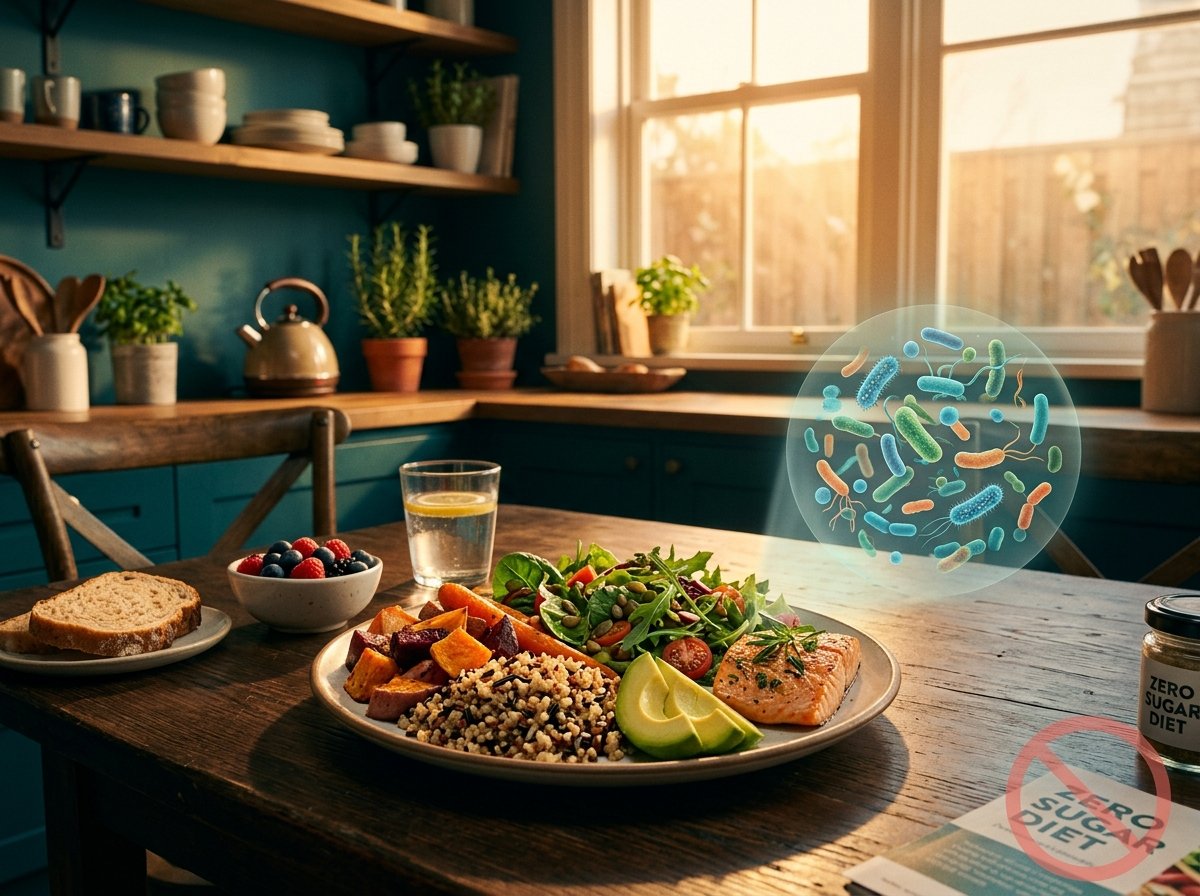






You check the boxes. Fruit with breakfast. A salad at lunch. Vegetables on the dinner plate most nights. By any conventional measure of healthy eating, you’re doing it right.
New international research suggests there may be a critical gap in that picture — one that has nothing to do with how much produce you eat, and everything to do with which produce you choose.
A Massive Study With A Surprising Gap
Published in the journal Food and Function, the research was led by scientists from the University of Reading, Harvard Medical School, the University of California Davis, and Mars, Inc. The team analyzed dietary data and biomarker measurements from more than 30,000 people across the United Kingdom and the United States — using objective biological markers rather than relying solely on self-reported food diaries, which gave the findings unusual precision.
What they were measuring was flavanol intake. Flavanols are naturally occurring plant compounds found in specific fruits, vegetables, and certain beverages, and they have been consistently linked in clinical research to meaningfully lower risk of cardiovascular disease.
The results were striking. Fewer than 20 percent of participants consumed enough flavanols to reach levels associated with real cardiovascular benefit. And critically, this shortfall wasn’t limited to people with poor diets. Many participants who regularly met the standard recommendation of five daily servings of fruits and vegetables still fell well short of adequate flavanol intake.
Why “Five A Day” Doesn’t Guarantee Heart Protection
This is the central insight of the research, and it challenges a piece of nutrition advice that has been repeated for decades almost without qualification.
“Flavanols can significantly reduce the risk of dying from cardiovascular disease, but only if you consume enough of them,” explained Dr. Javier Ottaviani, the study’s lead author. “Most people assume that eating plenty of fruit and vegetables covers this, but what this research shows is that the specific choices you make matter far more than the total amount.”
The issue is that flavanol content varies dramatically between different fruits and vegetables. Two people can both hit their five servings a day and end up with wildly different flavanol intakes, depending entirely on which specific foods made up those servings.
The 500mg Target Most People Miss
The research builds directly on findings from the COSMOS study — the largest clinical trial of flavanols ever conducted — which established that consuming approximately 500mg of flavanols per day was associated with a significantly lower risk of dying from cardiovascular disease.
This new study reveals that most people following standard dietary guidance, including the UK’s NHS Eatwell Guide, fall well short of that 500mg benchmark. The gap isn’t due to a lack of effort or awareness around healthy eating — it’s a structural gap in how nutrition guidance is communicated, focused on volume rather than specific compound content.
Where To Actually Find Flavanols
The practical value of this research lies in knowing exactly which foods deliver meaningful flavanol amounts, since the differences between foods are substantial.
A single punnet of plums (around 500g) provides approximately 450mg of flavanols — nearly the full daily target from one serving alone. Cranberries (250g) deliver roughly 300mg, while blackberries (200g) provide around 250mg.
A single cup of green tea contributes approximately 200mg, making it one of the most efficient flavanol sources of any common beverage. A small handful of broad beans (80g) provides around 140mg, and a punnet of cherries (400g) delivers roughly 130mg.
One medium apple eaten with its skin intact (200g) contributes approximately 110mg — a reminder that peeling fruit may be removing a significant portion of its flavanol content. Strawberries provide around 90mg per punnet, blueberries around 80mg, and two tablespoons of dry pinto beans add roughly 70mg.
By contrast, many staples of a typical “healthy” plate — lettuce, cucumber, bananas, and various root vegetables — contain comparatively low flavanol levels and contribute relatively little toward this specific cardiovascular benefit, despite their other nutritional value.
A Call For More Specific Dietary Guidance
The findings raise an important question about whether current nutrition recommendations need to evolve. Professor Gunter Kuhnle of the University of Reading believes they do.
“Five-a-day is the right message, but we may need to think more carefully about which five,” Kuhnle said. “Different fruits and vegetables offer very different nutritional benefits beyond vitamins and minerals, and as our understanding of these compounds grows, there is a real opportunity to make dietary guidance more specific and more effective. This research is a step towards understanding what that might look like in practice.”
This doesn’t mean current healthy eating advice is wrong — eating plenty of fruits and vegetables remains a foundational element of cardiovascular health. But this research suggests that the next generation of dietary guidance may need to move beyond simple serving counts toward more specific, compound-level recommendations.
What This Means For Your Plate
The encouraging takeaway is that closing this gap doesn’t require a dramatic dietary overhaul. Small, deliberate substitutions — choosing an apple with the skin on instead of peeled, adding a handful of blackberries to breakfast, swapping an afternoon coffee for green tea a few times a week, incorporating plums or cherries when in season — can meaningfully shift flavanol intake without requiring anyone to eat more food overall.
You don’t need to eat more. You need to eat smarter within the framework you’re already following. Your heart, it turns out, cares about which fruits and vegetables are on your plate — not just how many. ❤️🍎
Source: University of Reading / Harvard Medical School / Food and Function — June 19, 2026
Journal Reference: Javier I. Ottaviani, John W. Erdman, Francene M. Steinberg, JoAnn E. Manson, Howard D. Sesso, Hagen Schroeter, Gunter G. C. Kuhnle. Adhering to dietary guidelines does not yield flavanol intake levels associated with beneficial cardiovascular effects. Food & Function, 2026.
DOI: 10.1039/D6FO00867D